The most defensible estimate puts Mikhail Gorbachev's net worth at somewhere between $3 million and $7 million at the time of his death in August 2022, with $5 million being the most frequently cited midpoint figure. If you are comparing other famous Soviet-era figures, you may also want to look up boris spassky net worth, since estimate methods can vary just as much.
Gorbachev Net Worth: Estimated Wealth, Income Sources

Dmitri Volkov
5 Jun 2026
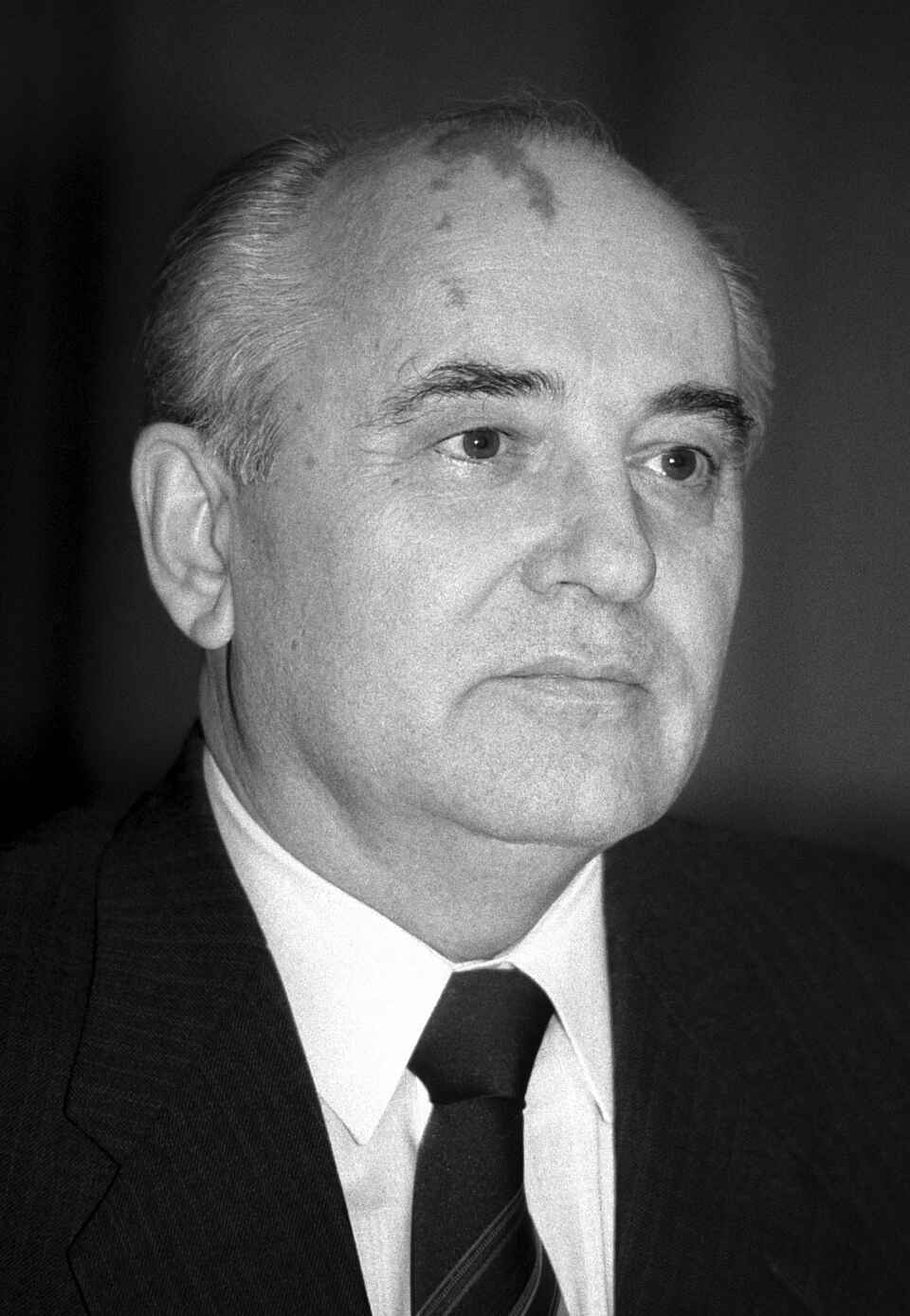
He was not a wealthy man by the standards of post-Soviet elites. Unlike oligarchs who converted political access into massive private fortunes during the 1990s privatization wave, Gorbachev ended his career with a modest asset base built largely on speaking fees, book royalties, and the proceeds of a philanthropic foundation he ran for three decades. There is no verified Forbes-style asset declaration for him, so every number you see online carries meaningful uncertainty.
The short version: what the estimates actually say
Celebrity Net Worth, one of the most widely cited estimate aggregators, placed Gorbachev's net worth at approximately $5 million at the time of his death. No major financial publisher like Forbes or Bloomberg produced a verified, methodology-backed profile for him, which tells you something important: he was not wealthy enough to appear on billionaire trackers, and not celebrity-flashy enough to attract the aggressive estimation that entertainment figures receive. The $3 million to $7 million range I use here reflects the spread across informal estimates, adjusted for the assets and income categories that are reasonably well-documented versus those that are speculative.
Why pinning down his exact wealth is genuinely hard
Several structural problems make Gorbachev's net worth difficult to nail down with precision. First, Soviet-era compensation was not denominated in freely convertible currency. His salary as General Secretary of the Communist Party and later as President of the USSR was paid in Soviet rubles, which had an artificial official exchange rate that bore no relationship to real purchasing power. Converting those figures into 2022 or 2026 USD requires assumptions about purchasing-power parity that researchers reasonably disagree on.
Second, there was no public asset disclosure requirement for Soviet or early post-Soviet leaders equivalent to what Western democracies demand. Gorbachev never filed a publicly available balance sheet. What we know about his assets comes from investigative journalism, foundation records, and occasional interview disclosures, none of which add up to a complete picture. Third, the Gorbachev Foundation, which he established in 1992, holds assets and generates revenue in ways that blur the line between institutional and personal wealth. Whether foundation resources counted toward his personal net worth depends entirely on how you define it.
Where the money came from: Soviet era vs. post-Soviet life

Soviet-era compensation
As General Secretary from 1985 to 1991 and USSR President from 1990 to 1991, Gorbachev received a state salary, access to state-provided housing, a state dacha, a ZIL limousine fleet, and other benefits-in-kind that were standard for top Soviet officials. These perks were substantial in terms of living standard but they were not transferable wealth. When the Soviet Union dissolved, those assets reverted to the Russian state or were renegotiated. The ruble-denominated salary itself was essentially valueless in hard-currency terms by 1991, when hyperinflation destroyed savings across the former Soviet space. In practical terms, Gorbachev exited the Soviet system with very little liquid wealth.
Post-Soviet income streams

After 1991, Gorbachev built his income through several documented channels. His international speaking career was lucrative: he commanded fees reportedly in the range of $100,000 to $150,000 per appearance during his peak years in the 1990s and early 2000s, when his historical significance made him a draw at corporate conferences and universities worldwide. Book advances and royalties from memoirs including 'Perestroika' (published 1987) and subsequent titles contributed meaningful one-time income, though royalty streams taper significantly over time.
He also participated in advertising campaigns, most famously a 1997 Pizza Hut commercial that reportedly paid him around $1 million and became one of the more unexpected post-Cold War cultural moments. His foundation, the Gorbachev Foundation, received donor funding and ran policy events, but he consistently maintained that it was a philanthropic vehicle rather than a personal revenue source.
Business interests and consulting
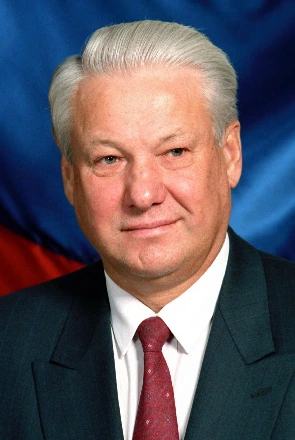
Gorbachev's documented business involvement was limited compared to contemporaries like Boris Yeltsin, whose family circle developed significant commercial interests during the 1990s. Those wider post-Soviet fortunes often get compared to claims about Boris Yeltsin net worth, which can be similarly hard to verify with primary asset disclosures.
Gorbachev had a stake in Novaya Gazeta, the independent Russian newspaper he co-founded with journalist Dmitry Muratov and businessman Alexander Lebedev in 2006, using part of his Nobel Peace Prize money (awarded in 1990, approximately $700,000 at the time) to fund the investment. Novaya Gazeta's commercial value was never large, and the paper was suspended in Russia in 2022 following the invasion of Ukraine.
No major equity positions in Russian corporations or real estate portfolios have been credibly documented for him.
Assets: what's documented and what's guesswork

The most concrete asset in Gorbachev's known portfolio was a property in the Razdory area outside Moscow, a dacha-style residence that he occupied in his later years. Russian residential real estate valuations are difficult to pin down for foreigners and vary enormously by location and condition, but properties in that corridor are generally worth several hundred thousand to low millions of USD.
Beyond that, no verified real estate portfolio, no documented stock holdings, and no foreign bank accounts have surfaced in reputable reporting. His Nobel Prize money, speaking fees, and book proceeds were the primary documented inflows over three decades, and much of that was apparently directed toward the foundation or spent over time. What remains is the modest personal estate that the $3 to $7 million range attempts to capture.
How net worth estimates like this are actually built
Net worth at its most basic is assets minus liabilities. For a private individual without mandatory disclosure, estimators work backward from what is knowable: documented income over a career (speaking fees, book advances, prize money, salaries), observable assets (real estate that appears in public records or reporting, business stakes that show up in corporate filings), and reasonable assumptions about spending and savings rates. The result is not a precise number but a range, and the width of that range reflects confidence level. A narrower range means more documented data points. A wider range, like the $3 to $7 million spread I apply to Gorbachev, reflects that we have category-level information but not transaction-level data.
Currency conversion adds another layer of complexity for Soviet-era figures. Soviet ruble income has to be converted using some proxy for real purchasing power, not the official exchange rate, because the official rate was politically set. Most analysts use GDP-per-capita comparisons or commodity-price benchmarks to estimate what a Soviet official salary actually bought in global terms, then translate that into USD equivalent. For Gorbachev specifically, this exercise matters less than for someone who accumulated wealth during the Soviet period, because his meaningful wealth-building came almost entirely after 1991 in USD-denominated transactions.
Why different sites show different numbers
If you search for Gorbachev's net worth across several sites, you will likely see figures ranging from $1 million to $10 million depending on the source. That spread is not primarily about access to better data; it is about methodology and update frequency. Sites like Celebrity Net Worth arrive at their figures through a combination of reported income events, comparable-figure benchmarking, and editorial judgment.
They rarely publish their working assumptions, which makes it impossible to evaluate whether the $5 million figure reflects careful analysis or a round-number estimate anchored to a few press reports. blank" rel="noopener noreferrer">Wikipedia's own survey of celebrity net worth lists acknowledges that reputable publishers like Forbes and Bloomberg can diverge materially on the same individual because they use different asset-valuation methodologies and different cutoff dates.
Wikipedia’s list of celebrities by net worth similarly notes that major publishers such as Forbes and Bloomberg can diverge materially because of differences in valuation methodology and cutoff dates Wikipedia's own survey of celebrity net worth lists acknowledges that reputable publishers like Forbes and Bloomberg can diverge materially.
The absence of a Forbes or Bloomberg profile for Gorbachev is itself informative. Those outlets focus their detailed estimation work on individuals whose wealth exceeds roughly $50 million, or on entertainers whose income is highly visible. Gorbachev fell below both thresholds, which means the field was left to lower-rigor estimate aggregators.
Because Boris Grebenshchikov is similarly not covered by verified mainstream net worth reporting, his estimated net worth also tends to vary widely by source Gorbachev fell below both thresholds. That is not a criticism of those sites; it is just the reality of who gets rigorous scrutiny.
For figures in this wealth tier, the honest answer is that $5 million is the best publicly available anchor, the true figure is likely within a few million dollars of that, and anyone claiming more precision is overstating their confidence. If you are comparing claims about Boris Zingarevich net worth, it is important to separate verifiable income and assets from speculative third-party estimates For figures in this wealth tier.
A source comparison at a glance
| Source | Estimate | Methodology Transparency | Last Updated |
|---|---|---|---|
| Celebrity Net Worth | $5 million | Low (no working assumptions published) | At time of death, August 2022 |
| Forbes / Bloomberg | No profile available | N/A | N/A |
| Wikipedia net worth lists | No Gorbachev-specific figure | Varies by sourced publication | N/A |
| This site's research range | $3–7 million | Income categories + documented assets, noted gaps | June 2026 |
How to check the evidence yourself

If you want to stress-test any net worth claim for Gorbachev, here is the practical approach. Start with documented income events: the Nobel Prize ($700,000 in 1990), the Pizza Hut fee (reported at approximately $1 million in 1997), speaking fees at credible ranges from contemporaneous reporting, and book royalties from titles that were bestsellers in the late 1980s and early 1990s.
Cross-reference these against the Gorbachev Foundation's publicly available reports if you can access them, noting what looks like institutional versus personal assets. Then search Nexis, the Internet Archive, and Google News for property records or business filings that surface his name. What you will find is that the evidentiary base is thin but broadly consistent with a $3 to $7 million range. If a site claims significantly more without citing specific assets or transactions, ask what those assets are.
- Identify every documented income event (prizes, speaking fees, book advances, ad deals) and sum them with realistic estimates for frequency and rate.
- Identify any documented assets (real estate in public records, business stakes in corporate filings) and apply conservative market valuations.
- Subtract obvious liabilities if any are reported (mortgages, legal judgments, foundation operating costs borne personally).
- Check publication date on any estimate you read: figures from 2010 are not the same as figures from 2022.
- Note whether the source explains its methodology or just states a number, and weight your confidence accordingly.
Reading his wealth through a post-Soviet lens
Gorbachev's relatively modest financial position is itself historically significant. The post-Soviet transition created enormous fortunes for those who used political connections to acquire state assets at privatization prices, a pattern visible across the oligarch generation of the 1990s. Gorbachev, who left power before the most aggressive privatization phase and who was politically marginalized by Yeltsin's government after 1991, did not participate in that process.
His wealth story is essentially the story of a former head of state who monetized his historical reputation through legitimate commercial channels: books, speeches, endorsements, and media, while directing a meaningful share of his resources toward political and intellectual work through his foundation.
That is a very different profile from figures like Boris Yeltsin, whose inner circle navigated the privatization era in ways that generated far larger asset bases, or from business-oriented figures whose fortunes are rooted in industry rather than public life.
For anyone using this site to understand post-Soviet wealth patterns, Gorbachev is a useful reference point precisely because he represents the floor of what political prominence translated into financially, rather than the ceiling. His net worth profile illustrates how historical significance and commercial marketability can generate a comfortable but not extraordinary estate, especially when the political transition that followed your tenure actively worked against your interests. That context matters more than the specific dollar figure.
What uncertainty level to expect from any estimate
For any public figure without mandatory financial disclosure, treat net worth estimates as order-of-magnitude guidance rather than precise valuations. A $5 million figure for Gorbachev means 'probably somewhere between low single-digit millions and high single-digit millions, not tens of millions and not sub-million. Net worth estimates for Boris Nemtsov are similarly hard to verify, and they vary widely depending on what assets or liabilities are included Boris Nemtsov net worth.
' That is genuinely useful information even if it is not a bank statement. The factors that would most dramatically change the estimate upward would be undisclosed real estate holdings, unreported foreign accounts, or business interests that have not surfaced in reporting. The factors that would push it downward would be foundation debts, late-life medical costs, or estate distributions made before death.
Without visibility into those variables, the honest confidence interval stays wide, and anyone who pretends otherwise is selling certainty they do not have.
FAQ
Why do Gorbachev net worth estimates vary so widely between $1 million and $10 million?
Most of the spread comes from how each site handles missing categories. Some add only known personal assets and documented income, others try to impute additional real estate, treat foundation holdings as personal wealth, or assume different spending and savings outcomes after 1991. If a source does not disclose what assets it counts, you should treat the number as a rough order of magnitude, not a calculation.
Does Gorbachev’s foundation count as part of his personal net worth?
It depends on the definition used. The foundation is an institution that can hold assets and receive donations, but it does not automatically become personal wealth unless you are assuming personal control or indirect benefit in a way that is hard to verify. When estimators include foundation value, the net worth figure usually rises, but there is no universally accepted rule for doing so.
Are the Soviet-era salary and perks supposed to be included in net worth today?
Usually not in a precise way, because perks like housing access, dachas, and state transport were benefits tied to office, not assets you can liquidate. Also, Soviet ruble compensation does not translate cleanly to modern USD because the “real value” depends on purchasing power assumptions. That is why most estimates focus more on post-1991 monetization than on office-era compensation.
What specific assets have been most consistently cited in Gorbachev net worth discussions?
The most concrete items that show up across reporting are his later-life residence outside Moscow (a dacha-style property in the Razdory area), plus income sources like speaking fees, book advances and royalties, and the Nobel Peace Prize. Beyond that, many figures rely on conjecture because credible documentation of additional real estate, stocks, or foreign accounts has not been widely surfaced.
Could Gorbachev have had hidden foreign bank accounts that would raise the estimate?
It is possible in theory, but there is no strong public evidence backing that kind of claim. If someone states a high net worth without naming specific offshore accounts or identifiable assets, treat it as speculation. For low-disclosure public figures, the absence of sourced assets usually matters as much as any stated number.
How much does the Pizza Hut commercial and other endorsements actually matter for the total?
Those events can meaningfully affect a net worth estimate because endorsements can bring large one-off payments. However, they are typically a small slice compared with a multi-decade speaking and publishing income stream, and what matters most is how much of that income accumulated rather than being spent or directed to the foundation. A single high-fee claim can move the estimate, but it rarely explains a tenfold jump on its own.
If a site claims Gorbachev was worth $20 million or more, what would need to be true?
To justify that range, you would generally expect credible evidence of substantial additional assets, such as multiple high-value properties, significant equity stakes in operating companies, or clearly documented large foreign financial holdings, plus enough retained earnings to keep net assets elevated. Without named assets and transaction details, these higher figures usually reflect methodology choices rather than verifiable balance-sheet items.
How do speaking fees and book royalties get turned into a net worth number?
Net worth is not just total earnings, it is earnings minus spending and any transfers. Good estimates build a timeline of income events (Nobel Prize, speaking peaks, royalties by period), then apply assumptions about savings rate, taxes, inflation, and support for family and the foundation. If two estimates use the same income events but different spending assumptions, they can produce very different net worth ranges.
What liabilities could lower the net worth estimate that some sources ignore?
Late-life medical expenses, debts, and early estate distributions can reduce net assets, but these are often not well documented publicly for private individuals. If you see a high estimate that does not acknowledge possible liabilities, it may be overstating confidence. Conversely, if it ignores debts but includes foundation assets as personal wealth, it can produce a misleadingly high number.
What is the best way to sanity-check a specific Gorbachev net worth claim you find online?
Ask what assets it lists, whether it distinguishes personal holdings from institutional holdings, and whether it provides a basis for the spending and savings assumptions. A useful estimate should align with known anchors like the Nobel Prize amount, reported speaking-fee ranges, the existence of his later-life property, and the lack of publicly confirmed large-scale portfolios. If it cannot explain the asset inventory, treat the number as unreliable.