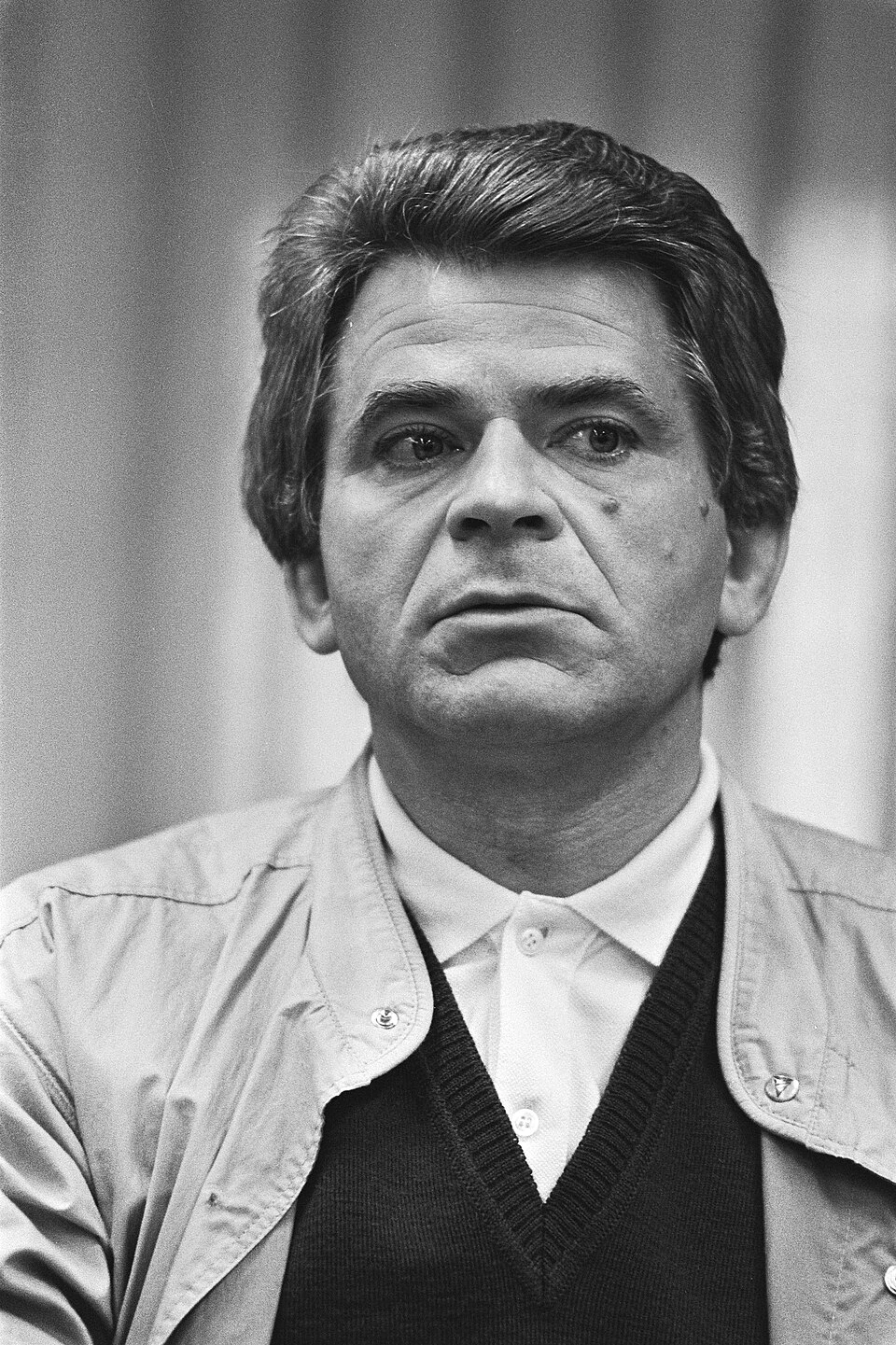
Boris Spassky's estimated net worth at the time of his death in 2025 was in the range of $1 million to $5 million, with most credible aggregator estimates clustering around $2 million to $3 million. That range reflects a lifetime of chess earnings, most of them modest by modern standards, supplemented by a handful of high-value match purses and a later career in France that was financially quieter than his peak Soviet-era years. He was never wealthy in the way a contemporary sports star would be, but he was far from broke either. The 1992 Fischer rematch alone likely netted him somewhere between $1.65 million and $1.7 million as the losing player, which would have anchored any reasonable long-term wealth estimate.
Boris Spassky Net Worth: Estimate, Income Sources, and How to Verify

Dmitri Volkov
17 Jun 2026
What 'net worth' actually means for someone like Spassky
Net worth is straightforward in theory: total assets minus total liabilities. For Boris Spassky specifically, the relevant asset categories would include any real estate (likely in France, where he settled after emigrating in 1976 and gaining citizenship in 1978), savings and investments accumulated over decades, and residual intellectual property income from books, games, and licensing. On the liabilities side, you'd factor in any debts, living expenses in later years when active income dropped off, and the costs associated with a health decline that reportedly included a stroke in 2012 followed by years of reduced mobility and medical care.
What net worth does not mean here is salary in the way a regular employee would have one. Chess grandmasters of Spassky's era earned through match prizes, appearance fees, and occasionally sponsorships or writing. There was no stock portfolio from a tech IPO, no rental property empire, and almost certainly no complex offshore structure. His wealth story is simpler than an oligarch's but harder to pin down precisely, because chess earnings from the Soviet era were often paid partly in rubles (with limited convertibility) and partly managed through Soviet sports institutions rather than going directly into a personal bank account.
How Spassky actually made money across his career
Tournament and match prizes
The headline number that anchors any Spassky earnings discussion is the 1972 World Championship match in Reykjavik against Bobby Fischer. The agreed prize fund was $125,000, a record for chess at the time. Fischer famously also negotiated a 30% share of television and film rights along with a portion of gate receipts, which complicated how that prize fund was ultimately distributed. As the losing player, Spassky's share was the smaller portion, likely somewhere in the $50,000 to $60,000 range from the base purse, though the exact split was not uniformly reported in primary sources. Adjusted for inflation, that figure represents several hundred thousand dollars in 2025 purchasing power, but as an absolute dollar amount it was not life-changing on its own.
The more financially significant event came two decades later. The 1992 Fischer-Spassky exhibition rematch in Yugoslavia carried a reported $5 million total prize fund. Wikipedia documents the 1992 Fischer, Spassky exhibition match and provides contextual details that can be used alongside contemporary reporting for prize-money verification 1992 Fischer-Spassky exhibition rematch in Yugoslavia. Contemporary reporting from the Christian Science Monitor and Washington Post described the winner's share as approximately $3.35 million, with the loser receiving roughly $1.65 million. Spassky lost, so his take was in that $1.65 million range, which remains the largest single financial event documented in his career. A Polgar-Spassky match in 1993 carried a reported $90,000 prize, per Liquipedia's results data, suggesting he continued to command reasonable appearance and match fees even into his mid-50s.
Coaching, appearances, and ambassador roles
After settling in France, Spassky played in three Chess Olympiads for France (1984 to 1988) on board one, which signals ongoing active participation but does not translate directly to major income. He also took on coaching and training work, as was common for grandmasters of his generation transitioning out of peak competitive play. Appearance fees at chess festivals and exhibitions supplemented that, particularly in Europe, where chess retained a higher cultural profile than in North America. Later in life, he was referenced in honor and ambassador contexts in the chess community, which may have included modest stipends or travel expenses rather than significant contract income.
Books, media, and licensing
Spassky's games and analysis appear in numerous chess publications, databases, and educational materials, but the royalty or licensing income from these is typically small for historical figures, especially those whose primary competitive career predates the digital era. The 1972 match generated significant media coverage and film/documentary interest, and Fischer's rights negotiations suggest there was real money in that media ecosystem, but how much flowed directly to Spassky in an ongoing way is unclear. It is reasonable to assume some residual income from interviews, archival use, and chess media appearances over the years, but this would be a secondary contributor rather than a primary income stream.
Why the estimates vary so much

If you search for Spassky's net worth, you'll find figures ranging from under $1 million to as high as $10 million depending on the source. If you are curious about how much Boris Yeltsin may have been worth, you can compare the sources and methodology behind the different estimates search for Spassky's net worth. That spread exists for a few specific reasons, and understanding them helps you calibrate which estimates to trust.
- No public financial disclosure: Spassky never filed public asset declarations or shareholder documents. Unlike politicians or publicly traded company executives, chess players have no obligation to disclose income or wealth.
- Soviet-era earnings are murky: Prize money and stipends earned before his 1976 emigration were partly in Soviet rubles and administered through state sports institutions. How much was converted, saved, or transferred is genuinely unknown.
- Aggregator methodology is often opaque: Sites that publish net worth figures for celebrities typically use a combination of known earnings, comparables, and editorial judgment. They rarely publish their underlying assumptions or update figures based on late-life medical expenses or asset drawdowns.
- Currency and cost-of-living factors: Living in France meant expenses in euros, and savings or earnings in multiple currencies complicate any snapshot estimate.
- Late-life health costs: Spassky suffered a stroke in 2012 and reportedly spent years in declining health before his death in 2025 at 88. Extended medical care and reduced income capacity in that period could have meaningfully affected his net worth at time of death compared to peak wealth estimates.
How to verify or refine the number yourself
If you're a journalist, researcher, or simply a curious reader who wants to stress-test a net worth figure, here is a practical approach to cross-checking Spassky's wealth estimate rather than just accepting a single number from an aggregator site. Chess.com compiles historical World Championship prize funds, including match-specific amounts, which can help bound earning ranges when you cross-check claims How Much Money Do World Chess Champions Make?. For a closer look at the latest estimates, see the current discussion on Boris Zingarevich net worth net worth figure.
- Start with documented earnings: The 1992 rematch loser's share of approximately $1.65 million is probably the most reliably sourced single data point, backed by contemporary AP, UPI, Washington Post, and Christian Science Monitor reporting. Use that as your anchor.
- Layer in additional known prizes: The $125,000 total purse from 1972 (with Spassky receiving a minority share), the $90,000 from the 1993 Polgar match, and estimates from earlier World Championship cycles (1966, 1969) give you a career earnings floor, though Soviet-era money is harder to translate to modern value.
- Compare aggregator figures critically: Sites like CelebrityNetWorth, networthlist.org, and famousbiography.io publish estimates but generally do not provide audited statements. Treat their figures as informed guesses rather than verified facts. If two or three independent aggregators cluster around the same number without obvious copying, that convergence is a mild positive signal.
- Check obituaries from reputable outlets: The Guardian, ESPN, AP, and FIDE published obituaries after Spassky's 2025 death. These typically include biographical context that can help you assess late-life financial circumstances, even if they don't quote balance sheet figures.
- Apply a reality check: A grandmaster of Spassky's era who had one very large payday ($1.65 million in 1992), lived modestly in France for decades, and faced significant health costs from 2012 onward is unlikely to have died with $10 million in assets. A range of $1 million to $5 million is plausible; anything above that would require documented evidence of other major assets.
A quick comparison: earnings vs. estimated wealth
| Income/Event | Approximate Amount | Reliability |
|---|---|---|
| 1972 World Championship (loser's share) | $50,000–$60,000 est. | Moderate — total purse confirmed, split less clear |
| 1992 Fischer rematch (loser's share) | ~$1.65 million | High — multiple contemporary news sources |
| 1993 Polgar match | $90,000 | Moderate — Liquipedia results data |
| 1966 and 1969 World Championship prizes | Low to moderate (Soviet-era) | Low — Soviet-era prize structures poorly documented |
| Coaching and appearances (post-1976) | Undocumented | Low — no public records |
| Books and media licensing | Undocumented, likely modest | Low |
| Estimated net worth at death (2025) | $1 million–$5 million | Low–Moderate — aggregator consensus, not audited |
Post-Soviet context and how it shaped his financial story
Spassky's financial trajectory is inseparable from the geopolitical reality he lived through. He was born in 1937, competed as a Soviet state athlete during the Cold War, emigrated to France in 1976 at a time when defecting or emigrating from the USSR meant leaving behind whatever assets existed in Soviet currency (which were not freely convertible), and then tried to rebuild a Western chess career in an era before the sport had meaningful prize inflation or commercial sponsorship. The Moscow Times has written about how post-Soviet chess economics created an uneven landscape: Russian and Soviet players who stayed in Russia often had institutional support from the Soviet and later Russian chess federation, while emigrants like Spassky navigated Western markets without that backstop but also without the constraints of Soviet bureaucracy.
The 1992 rematch in Yugoslavia was organized outside normal FIDE channels, and the prize fund came from Serbian sponsor Jezdimir Vasiljevic. That context matters because it explains why such a large sum was available for an exhibition match that had no formal world title stakes. It also introduced legal complications: the U.S. government warned Fischer that playing in sanctioned Yugoslavia violated executive orders, making the event controversial and its financial arrangements somewhat irregular. Spassky, as a French citizen, faced fewer legal complications but the broader irregularity of the match means the financial details rely on journalistic reporting rather than any official prize registry.
For comparison with others profiled on this site, Spassky's financial profile is closer to a cultural figure like Boris Grebenshchikov (a prominent Russian musician whose wealth derives from decades of creative work rather than large one-off events) than to someone like Boris Zingarevich, whose wealth is rooted in industrial assets and business interests. The post-Soviet wealth landscape created enormous fortunes for those positioned in resource extraction or finance, but chess grandmasters, even world champions, were not in that pipeline. Boris Nemtsov, for another example, operated in political and business circles that intersected with post-Soviet capital in ways Spassky simply did not.
What this all means for readers and journalists
The most honest answer to 'how much was Boris Spassky worth' is: probably somewhere between $1 million and $5 million at his peak, with the lower end of that range more plausible given health costs and reduced income in the final decade of his life. For a similar snapshot of wealth estimates and how they are calculated, see gorbachev net worth Boris Spassky worth. The 1992 rematch was his financial high point, and he had a long post-match life in France with modest but real ongoing income from the chess world. He was not a wealthy man by the standards of global sports stars, but he was not financially precarious either.
If you are writing about Spassky and need to cite a figure, the safest approach is to report a range (not a single number), note that the estimate is based on documented prize income and aggregator consensus rather than audited financials, and flag the 1992 rematch as the single largest documented earnings event. Avoid treating any aggregator's single figure as authoritative without tracing where that number came from. If the source cannot explain its methodology, treat the figure as illustrative rather than factual.
For readers who stumbled on this looking for a quick answer: Spassky earned real money from chess, especially in 1992, but he was a grandmaster who lived most of his adult life in France on chess-related income, not a tech founder or oligarch. A few million dollars in total lifetime wealth, mostly earned through competitive chess and appearances, is the most defensible picture the available evidence supports. If you are specifically searching for Boris Nemtsov net worth, you may want to compare how his finances were reported and sourced, since estimates often vary by methodology.
FAQ
Why do net worth estimates for Boris Spassky vary so much (for example, under $1M versus $10M)?
Yes. Aggregator net worth sites usually do not have access to audited statements for private individuals, so their numbers often combine documented prize money with assumptions about savings, property values, and taxes. For Spassky, the biggest driver of most estimates is the 1992 exhibition rematch, so estimates that treat smaller prize events as “career income” without separating one-off payouts are more likely to overshoot.
How can I verify the credibility of a specific “Boris Spassky net worth” number?
If you are trying to verify a figure, look for at least one primary-ish data point behind it, such as reported prize shares for specific matches (especially 1992), and then check whether the estimate separately accounts for living expenses and medical costs in later years. If the source only provides a single headline number with no breakdown, treat it as a low-evidence estimate.
Which event should matter most when estimating Boris Spassky’s wealth?
Many people assume the 1972 World Championship prize was Spassky’s financial peak, but the article indicates the 1992 rematch is the larger single documented payday. If an estimate ranks 1972 as the main reason for multi-million wealth, it may be missing how much of his documented earnings occurred much later.
Why do “career earnings” and “net worth” not match up for chess players like Spassky?
For a net worth check, treat annual income and one-time payouts differently. Match prizes and appearance fees can inflate a single year’s earnings, but that does not guarantee long-term wealth, especially if funds were spent on relocation, legal/administrative transition costs after emigration, or higher healthcare expenses later in life.
How should I handle Soviet-era earnings when estimating net worth?
A common mistake is converting Soviet-era earnings into modern dollars using a generic inflation calculator without considering convertibility limits and transfer constraints. The article notes Soviet currency arrangements and institutional handling, so a verification attempt should avoid assuming all Soviet-era value was freely bankable abroad.
What would have to be true for Boris Spassky’s net worth to reach the higher end of claims like $10M?
Look for evidence of major assets beyond chess income before trusting a very high estimate. For example, unusually high net worth claims would typically require plausible real estate holdings in France, significant investment growth, or credible documentation of large residual royalties. If none of these are supported, a lower multi-million range is more consistent with the income profile described.
How do medical and late-life expenses affect net worth estimates for Spassky?
Health and reduced mobility can change the structure of income, even if you cannot quantify costs precisely. For verification, prioritize sources that explicitly acknowledge a later-life decline in earning ability rather than assuming his post-match income stayed stable for decades.
What is the safest way to cite Boris Spassky net worth in an article?
If you are writing or citing, present the estimate as a range and anchor it to specific known cash events (again, especially 1992) rather than treating the “net worth” number as an audited fact. Also include a brief caveat that methodology is not transparent when the source cannot show how it reached the figure.
What is a practical method to stress-test an aggregator net worth figure for Spassky?
Yes, you can triangulate using match databases, archived reporting on prize funds, and credible journalism that discusses who received what. Then compare how the aggregator’s number changes when you swap in conservative assumptions for savings and property value growth.
What is the difference between estimating Spassky’s earnings and estimating his net worth?
If your goal is “how much did he earn,” the answer is closer to documented prizes plus fees. If your goal is “what was his net worth,” you must subtract plausible liabilities and costs over time, including living and healthcare expenses, and you must consider that some earnings could have been consumed rather than invested.