
The most widely cited estimate for Boris Yeltsin's net worth at the time of his death in April 2007 is approximately $2 million. That figure comes primarily from Celebrity Net Worth and is echoed by several estimate aggregator sites. It is a modest number for a head of state, and that modesty is itself the story: Yeltsin's officially declared assets in 1997 showed an annual income of around $43,000, real estate valued at roughly $206,700, and a $12,500 BMW. Those figures are far from what you would expect for someone who presided over the largest privatization of state assets in history, which is exactly why this net worth profile requires more context than a single dollar figure can provide.
Boris Yeltsin Net Worth: Estimates, Sources, and Limits

Dmitri Volkov
1 Jun 2026
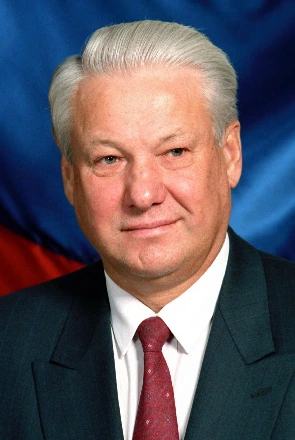
What 'net worth' actually means for a 20th-century politician

Net worth, in its technical definition, is total assets minus total liabilities: what you own minus what you owe. That includes real estate, cash, financial instruments, business stakes, and any other holdings at market value, then subtract any debts. For a living billionaire with disclosed shareholdings, this is relatively trackable. For a post-Soviet political figure who died in 2007 and operated inside a system with weak disclosure norms, notoriously opaque asset structures, and offshore financial channels, the calculation becomes far more speculative.
The core problem with estimating net worth for historical public figures like Yeltsin is that the data you would need, things like verified property registrations, bank account holdings, beneficial ownership records, and business equity stakes, either was never made public, was incomplete when disclosed, or was actively obscured. Russia's 1997 income declaration decree (Presidential Decree No. 484, dated May 15, 1997) required senior officials including Yeltsin to submit income and property data to the State Tax Inspectorate. Jamestown reports that in 1997 President Boris Yeltsin and others submitted income and property declarations to the State Tax Inspectorate under presidential decree no. 484 (May 15, 1997), and that the information was made available to selected newspapers required senior officials including Yeltsin to submit income and property data to the State Tax Inspectorate. That was a genuine step toward transparency. But as the Washington Post noted in June 1997, the regime was widely considered 'virtually useless' given weak enforcement and the absence of independent verification. Keep that structural limitation in mind every time you see a specific dollar figure attached to Yeltsin's name.
Boris Yeltsin net worth: mainstream estimates and what drives them
The $2 million figure is the anchor point across most publicly available estimate sources. Celebrity Net Worth places it explicitly at that level at the time of his 2007 death, and PennBookCenter repeats the same claim in its 2024 profile. Neither site publishes a detailed methodology breakdown for this specific figure, so treat it as a consensus floor estimate rather than a forensically audited number.
What inputs would a more rigorous analyst use to stress-test that number? The publicly documented data points are sparse but concrete: Yeltsin's 1997 declaration showed declared annual income of around 244 million rubles (the ruble was dramatically devalued at the time, making this modest in dollar terms), real estate valued near $206,700, and the BMW. His presidential salary was, by any international standard for a head of state, quite low. Those inputs alone would support an estimate well below $5 million in personal, documented wealth. The controversy arises not from these declared figures but from what analysts suspect was undeclared or indirectly held.
For reference, Forbes has acknowledged openly, in methodology notes from its Russian wealth coverage, that estimating net worth for Russian figures is inherently difficult due to incomplete information. Bloomberg's methodology for billionaire profiles emphasizes providing the most transparent calculations available, with detailed asset breakdowns. Bloomberg also emphasizes that its billionaire profiles are built around transparent calculations, including detailed asset breakdowns Bloomberg's methodology for billionaire profiles emphasizes providing the most transparent calculations available. Neither organization has ever published a Yeltsin net worth profile at the billionaire tier, which is itself meaningful data. The absence of Yeltsin from those lists is consistent with the $2 million to low-single-digit-millions range, at least for directly traceable personal assets.
Yeltsin family net worth: who gets included and why it matters

Searches for 'Boris Yeltsin family net worth' are really asking a different question from personal net worth. When analysts and journalists discuss 'Yeltsin family wealth,' they typically mean a broader circle that includes his wife Naina, daughters Yelena and Tatyana (Tatyana Dyachenko, his closest political confidante), and son-in-law Leonid Dyachenko. Valentin Yumashev, who married Tatyana Dyachenko after her divorce from Leonid Dyachenko, also enters the picture given his deep role in Kremlin inner circles during the 1990s.
The family dimension became particularly prominent in 1999 when the Washington Post reported congressional testimony claiming that Leonid Dyachenko was the beneficial owner of accounts at Bank of New York Trust Co. located in Grand Cayman. The Kremlin formally denied reports of Yeltsin family foreign bank accounts, stating that all income was declared under Russian law. That denial, combined with the reporting and congressional interest, illustrates exactly why 'family net worth' is treated as a distinct and more contested category than Yeltsin's personal declared assets.
When you see a headline like 'Boris Yeltsin family net worth is X million dollars,' examine whether the author is aggregating personal declared assets, assumed beneficial ownership through family members, or post-1999 wealth accumulation by relatives operating in Russian business after Yeltsin left the presidency. For a similar “net worth” question focused on what Boris Spassky was worth, see how his chess earnings and sponsorships compare to the posthumous estimates that get repeated online Boris Yeltsin family net worth. These are three very different things, and conflating them produces misleading numbers in either direction. This article separates them deliberately: Yeltsin's personal documented assets are modest and well within the $2 million to $5 million range. Any larger family wealth claims are rooted in allegations about offshore structures and post-presidential business interests of relatives, and those claims lack verified documentation in the public record.
Sources and methodology: how to judge any Yeltsin wealth estimate
Good wealth profiling requires knowing exactly where each data point comes from and how old it is. For Yeltsin specifically, here is the evidence hierarchy as it stands in 2026:
| Source type | What it shows | Reliability notes |
|---|---|---|
| 1997 presidential income declaration (Decree No. 484) | Declared income ( | Official but unverified; LA Times noted it 'fell short' of full disclosure |
| Jamestown Foundation reporting (1997) | Specific ruble income figures from declaration cycle | Contemporaneous; cross-checks primary declaration data |
| Deseret News (May 31, 1997) | Asset breakdown from declaration submission | Direct news coverage of declaration release; reliable as a record of what was disclosed |
| Celebrity Net Worth / aggregator sites | $2 million net worth at death (2007) | No published methodology; treat as estimate consensus, not audited figure |
| Washington Post (Sept. 1999) | Testimony on Dyachenko offshore accounts (Cayman Islands) | Congressional testimony, not proven; Kremlin denied; relevant for family wealth discussion |
| UPI (Aug. 1999) | Kremlin denial of foreign accounts report | Official denial on record; context for controversy |
| Forbes / Bloomberg methodologies | Framework for how Russian net worth estimates are built | Useful for calibration; neither org. placed Yeltsin in billionaire tier |
The most reliable anchor remains the 1997 declaration data, because it is the only point where Yeltsin personally submitted verifiable figures, even if those figures were incomplete. Everything else, the $2 million death-era estimate, the offshore account allegations, and the family wealth speculation, is built on inference, secondhand reporting, or unverified congressional testimony. That does not make those sources worthless, but it does mean you should weight them accordingly.
The wealth story in context: how Yeltsin's career shaped his finances

Boris Yeltsin was born in 1931 in Butka, a village in the Sverdlovsk region of Russia. His career moved through Soviet-era construction and engineering management, then into Communist Party regional leadership in Sverdlovsk, and then into national politics as a Communist Party Central Committee secretary under Gorbachev. By 1991 he was the elected President of the Russian Federation, a position he held until his surprise resignation on December 31, 1999, when he handed power to Vladimir Putin.
Throughout the Soviet phase of his career, personal wealth accumulation in the Western sense was not possible. The Soviet system did not permit private property in most forms, and party officials lived on state-provided salaries and subsidized housing. The transition to personal wealth, where it existed, came during and after the 1991-1999 presidential period, precisely when Russia's privatization program transferred enormous state assets to private hands at dramatically undervalued prices. Yeltsin oversaw that process, yet his personal declared assets remained modest. This is either a reflection of genuine restraint, effective concealment, or wealth channeled through family members rather than held in his own name. All three explanations have been argued in the public record.
Post-presidency, Yeltsin retained a state pension and security detail but did not appear to enter the business world in the manner of some post-Soviet leaders. He died on April 23, 2007, at age 76, from congestive heart failure. The timeline matters because it caps any post-presidential wealth accumulation at roughly seven years, and there is no documented evidence of significant business income or asset acquisition during that period.
For comparative context: Mikhail Gorbachev, who preceded Yeltsin as the last Soviet leader, also ended up with a relatively modest publicly documented net worth, much of it tied to his foundation and memoir royalties. The pattern of post-Soviet leaders with surprisingly low declared personal wealth is consistent, and it reflects both the limitations of disclosure norms and the tendency for wealth to travel through institutional vehicles and family networks rather than direct personal holdings. Other prominent Boris-named figures from the Russian political and cultural sphere show similarly varied and often contested wealth profiles.
Controversies and limitations: where the data breaks down
The honest answer is that no one outside of Yeltsin's inner circle has ever had full visibility into his financial life. The 1997 declaration was a political gesture as much as a transparency measure, and multiple credible news organizations at the time questioned whether the disclosed figures reflected reality. The Los Angeles Times noted in June 1997 that the disclosures left unexplained how Yeltsin had acquired significant assets on what it called a 'meager government salary.' That is not an accusation but it is a legitimate analytical gap.
The offshore account allegations involving his son-in-law Leonid Dyachenko introduced a separate layer of complexity. Whether those accounts, if they existed, represented Yeltsin family assets or purely Dyachenko's personal business dealings was never established publicly. The Kremlin denied the reports. No charges were filed. The controversy is part of the record but it does not resolve into a usable asset figure.
A further complication is that Russian financial data from the 1990s is notoriously unreliable as a baseline. The ruble collapsed in 1998, wiping out domestic savings. Property valuations were distorted by a dysfunctional real estate market still emerging from Soviet pricing. Even a good-faith effort to declare accurate asset values in 1997 would have produced figures that do not translate cleanly into dollar equivalents by modern valuation standards.
The political sensitivity of the subject also affects what gets published. Russian oligarch and political wealth is a topic where sources have career incentives to either inflate (to signal power) or deflate (to avoid scrutiny) reported figures. Neither direction produces clean data for researchers.
How to use this guide going forward
If you are researching Boris Yeltsin's net worth today, here is the practical framework to use. Because of those factors, it is better to interpret Boris Nemtsov net worth estimates as ranges driven by incomplete disclosure rather than a single audited number. If you see different numbers for Boris Zingarevich’s net worth, compare the source’s evidence standard and whether it is estimating personal assets or family holdings Boris Yeltsin net worth today. Start with the $2 million estimate as the most commonly cited figure for his personal wealth at death, and treat it as the lower bound of the credible range for directly documented assets. The declared 1997 data is consistent with a personal net worth well under $5 million. If you encounter claims of tens of millions or more attributed to Yeltsin personally, ask whether the source is aggregating family wealth, citing undocumented allegations, or extrapolating from the privatization-era context without evidence.
For family wealth estimates, look for whether the source specifies which family members are included and what documentation supports the claim. Tatyana Dyachenko (later Yumasheva) and Valentin Yumashev remained involved in Russian political and media circles well into the 2000s, and any estimate of 'Yeltsin family net worth' that extends to post-2007 wealth accumulation by those relatives is measuring something significantly different from Yeltsin's own estate.
To cross-check any figure you find, prioritize sources in this order: contemporaneous news coverage of the 1997 declaration filings (Deseret News, Jamestown, El País, Washington Post archives from 1997 are all on record), official Russian legal instruments like Decree No. 484, Forbes and Bloomberg wealth methodology discussions for calibration, and then aggregator sites as a last reference, not a primary source. If a new figure emerges in 2026 or later, check whether it comes with a methodology note or an asset breakdown. If it does not, it is likely recycling the same $2 million consensus without new information.
The broader lesson from the Yeltsin profile applies to virtually any post-Soviet political figure: declared wealth and real wealth are not the same thing, the disclosure regime of the 1990s was structurally weak, and family wealth channels can be as important as personal holdings. Keeping those distinctions clear is what separates a useful wealth profile from a number that sounds specific but explains very little. If you are also looking up Boris Grebenshchikov net worth, use the same evidence-first approach: prefer primary disclosures and clear methodology over recycled consensus figures.
FAQ
Is Boris Yeltsin’s net worth really $2 million, or could it be higher?
The $2 million figure is best treated as a lower bound for directly documented personal assets, because it is mostly repeated without a public methodology. The more rigorous anchor is the 1997 income and property declaration, which is consistent with personal wealth under $5 million, but it cannot rule out undeclared holdings or wealth routed through relatives or corporate vehicles.
What’s the difference between “Boris Yeltsin net worth” and “Boris Yeltsin family net worth”?
Personal net worth refers to assets and liabilities attributable to Yeltsin himself, using declared figures where available. “Family net worth” usually folds in his wife, daughters, and in-law network, and may include allegations about beneficial ownership or post-presidency business activity. Those are different measurement targets, and the methodology often changes the number dramatically.
Why do so many websites repeat the same Yeltsin net worth number without showing how they got it?
Many aggregator sites recycle the same death-era estimate and do not provide a step-by-step calculation, asset-by-asset valuation, or liability assumptions. If a site does not state the evidence basis (for example, which filing, which valuation date, and which assets are included), the figure should be treated as a claim, not a calculation.
How should I convert Yeltsin’s 1997 ruble income into a modern dollar equivalent?
You cannot convert it cleanly without choosing a specific exchange-rate moment and inflation assumption. The ruble collapse in 1998 and distortions in property pricing mean that any dollar translation is highly sensitive to the chosen method, so dollar figures derived from that period are better used for direction-of-magnitude rather than precision.
Do the BMW and real estate values in the 1997 declaration indicate his net worth was truly low?
They are concrete components of declared assets, and they support the idea of modest personal holdings. However, they do not capture undisclosed bank balances, offshore structures, or indirect ownership. Also, declared property values may not match market value in a dysfunctional transition-era real estate market.
Were there any legal outcomes tied to the offshore account allegations involving Dyachenko?
Public reporting included claims and denials about offshore accounts and beneficial ownership, but the controversy did not result in a clear public resolution that establishes a verified asset figure. That means the allegations can inform skepticism, but they cannot be plugged into a definitive net worth model without corroborated documentation.
Could Yeltsin’s assets have been held under entities instead of his own name?
Yes. In environments with weak disclosure enforcement, wealth can be held through relatives, associates, foundations, or controlled companies, which makes “ownership” and “beneficial control” diverge. That is a key reason why a low declared personal net worth can coexist with larger wealth suspicions.
Does Yeltsin’s resignation at the end of 1999 limit possible post-presidency wealth growth?
It limits how much personal wealth could plausibly be built through later employment or business activity, because he died in 2007. That said, it does not eliminate the possibility of delayed or indirect wealth transfers predating his death, so it mainly constrains storylines that rely on many years of new, traceable earnings.
How can I tell whether a “Boris Yeltsin net worth today” claim is trustworthy?
Check whether the source specifies the measurement date, whether it covers personal assets or family/beneficial ownership, and whether it cites a primary evidentiary basis beyond recycled estimates. If it provides a large new number (for example, tens of millions) without an updated asset breakdown or methodology, it is likely repackaging the consensus rather than presenting new proof.
What should I assume if Forbes or Bloomberg do not list Yeltsin as a billionaire in their typical formats?
Their absence is consistent with a view that traceable personal wealth was not at the billionaire tier, at least under their evidence standards. It does not prove zero hidden assets, but it does suggest that, based on available documentation and methodology, the numbers did not meet the threshold for their published billionaire coverage.