As of June 2026, the most credible estimate for Sergey Galitsky's net worth sits in the range of $2.5 billion to $3.5 billion USD. That figure is substantially lower than his peak wealth, which Forbes tracked at roughly $7 to $8 billion during Magnit's high-growth years, before he sold the majority of his stake to VTB Bank in February 2018 for approximately 138 billion rubles (around $2.5 billion at the time). What remains is a minority holding in Magnit, his ongoing ownership and funding of FC Krasnodar, and assets accumulated over decades of building Russia's largest grocery retail chain from scratch.
Sergey Galitsky Net Worth: Estimate, Sources, and Method

Dmitri Volkov
16 Jun 2026
Who Sergey Galitsky is and why his wealth matters

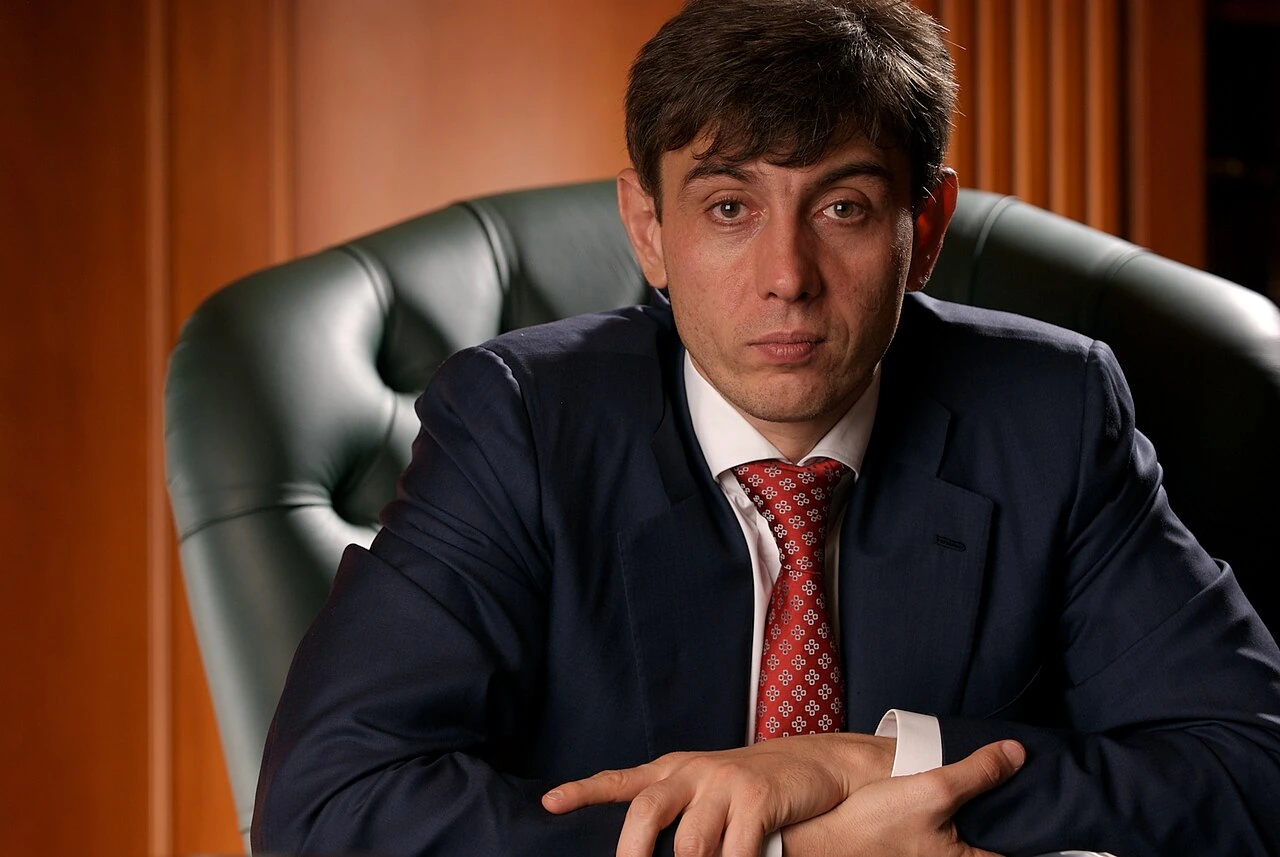
Sergey Nikolayevich Galitsky is one of the most consequential retail entrepreneurs to emerge from the post-Soviet business landscape. Born Sergey Nikolayevich Arutyunyan, he built Magnit from a small wholesale business in Krasnodar in the early 1990s into a national retail empire with thousands of stores across Russia. At its peak, Magnit competed directly with X5 Retail Group for the title of Russia's largest food retailer by store count and revenue, and Galitsky was one of the very few Russian billionaires who built his fortune primarily through consumer retail rather than oil, gas, or metals.
His wealth matters in the context of this region's financial history for a specific reason: it represents an example of private-sector, consumer-driven wealth creation in a business environment where resource extraction and state proximity dominate the billionaire class. He also owns FC Krasnodar, a football club he founded and funds personally, which he has grown into one of Russia's top football institutions and an internationally recognized club. In 2015, the Russian Football Union recognized Galitsky with its award for contribution to football development. The club is widely seen as a personal passion project rather than a profit center, which means it functions more as a wealth expenditure than a wealth driver.
His story intersects with broader geopolitical and regulatory dynamics that affect any wealth estimate you look at today. When he sold most of his Magnit stake to a state-owned bank, it signaled both a liquidity event and a shift in Russia's corporate governance landscape. Understanding that context is essential to reading any net worth figure correctly. If you want the quickest way to interpret what any estimate says about his finances, also review the discussion of sergei grinkov net worth as a related wealth-comparison checkpoint.
Direct answer: estimated net worth range and what it includes
Forbes maintained an active profile for Sergei Galitsky as recently as March 2026, placing him in the billionaire range. If you are comparing billionaire fortunes beyond Galitsky, you may also want to look up sergei guriev net worth for a related retail-adjacent example of how different fortunes are tracked. Cross-referencing that with the known transaction history, residual ownership, and the performance trajectory of Magnit since 2018 gives a reasonable basis for a $2.5 to $3.5 billion estimate. This helps explain why some sources quote Sergey Galitsky’s shoigu net worth range rather than a single fixed number $2.5 to $3.5 billion estimate. Here is what that figure likely includes and excludes.
| Asset / Holding | Description | Estimated Contribution to Net Worth |
|---|---|---|
| Magnit minority stake | Galitsky retained a minority share after selling 29.1% to VTB in 2018; precise current percentage is not publicly confirmed as of 2026 | Largest single component; value tied to Magnit's market cap |
| Cash and liquid assets from 2018 sale | 138 billion rubles (~$2.5B) received from VTB; net of taxes and reinvestment unknown | Significant, partially deployed |
| FC Krasnodar ownership | Privately held club; treated as a liability/expenditure asset given ongoing funding requirements | Negligible positive; likely a net cost |
| Real estate and personal assets | Not publicly disclosed; assumed consistent with billionaire-class holdings in Russia | Minor contribution; not independently verified |
| Other private investments | Not publicly documented | Unknown; not included in base estimate |
The bottom line: the 2018 stake sale to VTB was the defining liquidity event that locked in a large portion of his wealth in cash or near-cash form. The remaining Magnit holding is the main variable that moves his net worth up or down based on the company's market performance. Magnit's AGM in June 2025 confirmed no dividends were paid on ordinary shares for 2024, which matters for income flows but does not directly affect the value of the underlying stake.
How net worth estimates are calculated for private and semi-private holdings

Magnit is publicly traded on the Moscow Exchange, which makes Galitsky's stake in it relatively straightforward to value compared to a purely private holding. The math is simple in principle: take the number of shares he owns, multiply by the current share price, and adjust for any control premium or liquidity discount. The harder part is confirming exactly how many shares he currently holds, since his disclosed stake has changed over time and he is no longer in an executive role that requires ongoing public disclosure.
For any private assets or the FC Krasnodar holding, methodology shifts. The CFA Institute outlines three standard approaches for valuing private companies: an income approach (discounted cash flow, projecting future earnings back to a present value), a market approach (applying multiples from comparable public companies to estimated revenue or profit), and an asset-based approach (summing up underlying tangible and intangible assets minus liabilities). Forbes uses a version of the market approach for its Forbes 400 and billionaire rankings, applying revenue or earnings multiples from comparable public companies and sometimes using company-provided financials directly.
Both Forbes and Bloomberg's Billionaires Index track Galitsky dynamically, though Bloomberg's index provides more granular breakdowns of how each component of a billionaire's fortune is calculated. The key caveat with any such estimate is currency: all ruble-denominated assets need to be converted at current exchange rates, and ruble volatility since 2022 creates real uncertainty in the dollar-equivalent figure. A 10% shift in the ruble-dollar rate moves the dollar estimate meaningfully.
Key wealth drivers: ownership stakes, major assets, and business performance
Magnit remains the central engine of Galitsky's wealth, even in minority-holder form. The company is one of Russia's largest employers and operates tens of thousands of retail points. Its revenue and profitability drive the market capitalization that underpins his stake's value. After Galitsky sold his 29.
Magnit’s 2018 annual report (PDF) states that in February 2018 Galitskiy S. N. entered into an agreement with “VTB Infrastructure Investments” LLC on the sale of 29. 1% of PJSC Magnit shares he owned [sale of 29.
1% stake to VTB in February 2018](https://ar2018. magnit. com/pdf/ar/en/50_50. pdf).
1% stake to VTB and later resigned from all operational roles, Marathon Group became a key strategic investor. Magnit's shareholder structure has evolved significantly since 2018, and the investor relations page on Magnit's website (specifically the Shares and GDRs section with its shareholder structure table) is the most reliable place to verify any reported ownership percentage.
Before the 2018 sale, Galitsky's disclosed stake had already moved: at one point corporate filings show it changing from 43.9% to 41.8%, illustrating that he was periodically adjusting his position. By April 2018, after the main VTB transaction closed, he described himself publicly as a minority shareholder and stepped back from the CEO role entirely. Magnit’s AGM results press release materials also document his position in connection with board candidacy information from the annual general shareholders meeting described himself publicly as a minority shareholder. That transition from controlling founder to minority investor is a meaningful shift in both control and wealth calculation terms, because a controlling stake typically commands a premium over a minority position.
FC Krasnodar is the other major asset, but it functions differently. Galitsky has invested heavily in the club's infrastructure, including a privately financed stadium and youth academy that are widely considered among the best in Russia. This is wealth deployment, not wealth generation, in any practical sense. It does not appear in net worth calculations as a positive contributor unless the club were sold, and there is no public signal of that intention.
Verification: sources to check and how to reconcile conflicting reports

If you want to verify Galitsky's net worth independently, here is the practical path to follow. Said Gutseriev net worth is often discussed in the same billionaire-estimate context, but it comes from a different business footprint than Galitsky's retail holdings. Start with the most reliable primary signals, then layer in secondary trackers.
- Forbes Real-Time Billionaires profile for 'Sergei Galitsky': Forbes updates this dynamically and was showing an active profile as of March 2026. It is the most commonly cited single-source figure and is based on confirmed public market holdings.
- Bloomberg Billionaires Index: Bloomberg provides more detailed methodology breakdowns per individual. Search for 'Sergei Galitsky' or 'Sergey Galitsky' on Bloomberg's billionaire tracker to see how the estimate is decomposed.
- Magnit Investor Relations (magnit.com): Check the Shares and GDRs page for current shareholder structure. This is the primary source for confirming any residual ownership percentage. Annual reports (FY 2024 and FY 2025 are available) also contain historical ownership disclosures.
- Moscow Exchange (MOEX) filings: Significant ownership changes at publicly traded Russian companies require disclosure. If Galitsky has bought or sold Magnit shares above disclosure thresholds, it will appear in exchange filings.
- Magnit annual reports: The 2018 annual report explicitly documents the VTB stake sale as a key transaction. Subsequent reports track governance changes and shareholder structure evolution.
- Cross-check against Celebrity Net Worth with skepticism: This source sometimes appears in search results with a specific dollar figure for Galitsky, but it does not disclose methodology and often lags behind major transactions by months or years. Use it as a reference point, not a primary source.
When you encounter conflicting figures, the most common explanation is currency conversion timing (ruble vs. dollar rate on a specific date), stale ownership data (using a pre-2018 stake percentage), or confusing gross asset value with net worth (not subtracting liabilities or taxes). The Bloomberg and Forbes estimates are generally the most current and methodologically transparent for dollar-denominated net worth.
What could change his net worth from here
Several factors could move Galitsky's wealth materially in either direction over the coming months and years.
- Magnit's stock performance on the Moscow Exchange: This is the single biggest lever. A 20% move in Magnit's share price translates directly into a significant change in the ruble value of his remaining stake. Magnit's revenues, margins, and dividend policy (the AGM confirmed no dividends on 2024 results) all feed into the stock price.
- Ruble-dollar exchange rate: All ruble-denominated assets convert to dollars at the prevailing rate. Ruble weakness reduces the dollar-equivalent net worth even if the ruble value of assets stays flat.
- Sanctions and regulatory risk: OFAC's sanctions frameworks, including Magnitsky-related programs, represent a structural risk for Russian business figures with international asset exposure. Galitsky has not been publicly sanctioned as of the date of this article, but the regulatory environment for Russian nationals with offshore exposure remains unpredictable. Any sanctions designation would immediately affect the accessibility of assets and could depress valuations.
- Additional Magnit stake changes: If Galitsky sells more shares or acquires additional ones, it would directly change the calculation. Mandatory disclosure thresholds mean large moves would be publicly reported.
- FC Krasnodar expenditure trajectory: If the club requires significantly larger capital injections or if Galitsky decides to monetize it through a sale or partial stake offering, it would affect net worth in either direction.
- Broader Russian market conditions: The Moscow Exchange's overall performance, access to international capital markets, and the general Russian macroeconomic environment all influence what Magnit is worth as a business.
Common name mix-ups and quick disambiguation
There are a few identity confusions that come up regularly when researching 'Sergey Galitsky,' and it is worth clearing them up directly.
| Name | Who They Are | How to Distinguish |
|---|---|---|
| Sergey Galitsky (this article) | Founder of Magnit, President of FC Krasnodar; born Sergey Arutyunyan; Russian billionaire retailer | Associated with Magnit, Krasnodar; retail sector; Krasnodar region |
| Alexander Galitsky | Managing partner and co-founder of Almaz Capital, a venture capital firm; entirely different sector and profile | Tech/VC sector; no connection to Magnit or football |
| Said Gutseriev | Another post-Soviet business figure profiled in this space; unrelated to Galitsky but sometimes appears in related searches | Different family, different industry; Gutseriev is associated with oil and real estate |
| Sergei Guriev | Russian economist, not a business oligarch; known for academic and policy work | Academic/economist profile; no connection to retail or Magnit |
The birth name detail is also worth flagging: Galitsky was born Sergey Nikolayevich Arutyunyan, an Armenian-origin surname, and adopted the surname Galitsky later. Some older or international sources may use different transliterations of his name, including 'Galitskiy' (closer to the Russian spelling), 'Galitski,' or 'Galitskii.' All of these refer to the same person. When you see any of those variants combined with 'Magnit' or 'FC Krasnodar,' you are looking at the right individual.
It is also worth noting that some searches conflate the 'Magnitsky' sanctions program with 'Magnit' the company or 'Galitsky' the person. The Magnitsky sanctions program (named after Sergei Magnitsky, a lawyer who died in Russian custody in 2009) is entirely separate from Magnit the retail chain or Sergey Galitsky personally. The naming similarity is coincidental and has caused genuine confusion in media coverage.
FAQ
Why do net worth estimates for Sergey Galitsky sometimes vary by hundreds of millions even when they reference the same Magnit stake?
Most current estimates value his wealth using the market value of his remaining Magnit shares, then convert rubles to USD. They can differ if one source uses the share price from a different date, or if they apply different assumptions for a minority discount versus a control premium. A practical check is to look for the source that states an as-of date for the share price it used.
Does “value of shares” equal Sergey Galitsky net worth, or are liabilities included?
Yes. The relevant figure is not “gross value of shares,” it is net wealth after subtracting any reported debts, taxes, or other liabilities tied to his holdings and entities. Many public articles accidentally treat the equity value of a stake as net worth, which can inflate the number.
How can I tell whether today’s Sergey Galitsky net worth estimate is based on current ownership or an outdated percentage?
Because the stake is in a publicly traded company, ownership changes are the biggest driver of short-term movement. However, he is no longer an active executive, so disclosures may be less frequent or less prominent than during his control period. The most reliable method is to verify the current shareholder percentage from Magnit’s investor-relations shareholder structure table, not older filings or third-party summaries.
If Magnit doesn’t pay dividends on ordinary shares, should I still expect Sergey Galitsky net worth estimates to change?
Dividends generally matter less than share price for his net worth, especially if he holds ordinary shares in a way that leads to limited net cash payouts. That said, if Magnit ever changes dividend policy, investors tracking net worth may update their “income to wealth” assumptions, particularly if they model reinvestment of payouts rather than focusing only on market valuation.
Do net worth trackers add meaningful value for FC Krasnodar when estimating Sergey Galitsky net worth?
Not directly. FC Krasnodar is largely treated as a wealth expenditure rather than an operating asset that reliably monetizes through dividends. Unless there is a credible sale, transfer of ownership, or a reported third-party valuation event, most net worth models either assign a conservative value or largely exclude it as a positive contributor.
Do minority discounts or liquidity assumptions significantly affect Sergey Galitsky net worth calculations?
It can, depending on how the model handles liquidity. If a source assumes he could sell a portion of his remaining Magnit stake quickly at market prices, it will use a tighter estimate. If it assumes potential sale restrictions, wider bid-ask spreads, or a minority discount, the USD number can be lower even when the share price is the same.
How much does USD conversion date change the Sergey Galitsky net worth range?
Currency timing is usually one of the largest sources of discrepancy. A ruble weakening against the USD between the source’s valuation date and your reading date can make the same ruble-denominated stake appear much larger or smaller in USD terms.
Why might two reputable trackers show different Sergey Galitsky net worth figures at the same time?
Not necessarily. Some trackers update dynamically using real-time or near-real-time market data, while others revise monthly. If you compare a “snapshot” estimate from one site to a “current” estimate from another, the difference may reflect timing rather than any change in ownership or business performance.
What are the most common research mistakes that lead to the wrong Sergey Galitsky net worth number?
A quick edge case: if you see a number tied to a different person, it can be a misidentification. Make sure the context includes Magnit or FC Krasnodar, and watch for name variants like Galitskiy/Galitski. Also, “Magnitsky sanctions” is unrelated to Sergey Galitsky and should not be used to infer his wealth.