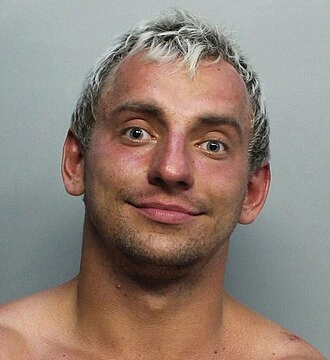
As of May 2026, the most credible estimate puts Said Gutseriev's net worth at approximately $1.8 billion, based on Forbes' real-time figure last updated in March 2026 and confirmed as of April 17, 2026. That number reflects his stakes in retail and financial holdings within the SAFMAR Group ecosystem, primarily his controlling interest in M.Video-Eldorado and his prior ownership of PJSC SFI. But here's the immediate caveat: that $1.8B figure is an estimate built on illiquid, partially disclosed, sanctions-complicated assets, so it should be treated as a directional range, not a bank balance.
Said Gutseriev Net Worth: How Estimates Are Calculated
Dmitri Volkov
12 May 2026
Who Said Gutseriev Is (and Why Searches Get Tangled Up)
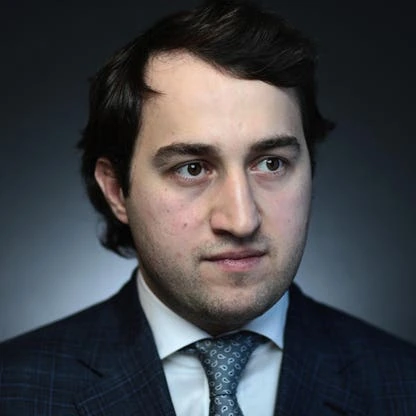
Said Mikhailovich Gutseriev (Саид Михайлович Гуцериев in Russian) was born on April 18, 1988, and is the son of Mikhail Gutseriev, one of Russia's most prominent and controversial oligarchs. Said is a Russian entrepreneur in his own right, holding board positions and ownership stakes across several major Russian corporations, but his name is almost inseparable from his father's in search results and news coverage. That conflation matters enormously when you're trying to nail down a net worth figure.
The Gutseriev name refers to a family business network, not a single person. Mikhail Gutseriev built wealth primarily through oil and gas via Russneft, while Said was given stakes specifically in retail and financial services businesses under the SAFMAR Group umbrella. Said is the major beneficiary owner and a board member of M. On April 29, 2022, Reuters (republished by MarketScreener) reported that Said Gutseriev agreed to partly or fully sell his stake in M.
Video-Eldorado, describing him as the company’s major beneficiary owner and a board member. The April 29, 2022 M.
Video-Eldorado press release describes Said Gutseriev as the company’s “major beneficiary owner” and a “member of the Board of Directors. ” [Said Gutseriev as the company’s “major beneficiary owner” and a “member of the Board of Directors”](https://prod. mvideoeldorado. 3ebra.
com/fileadmin/userupload/pressreleases/eng/2022/220429MVIDpress-releaseChangesownershipstructureENG. pdf). Video-Eldorado, Russia's largest consumer electronics retailer, and was previously connected to PJSC SFI, a financial holding described by UK authorities as an entity of strategic significance to Russia. When databases or articles quote a "Gutseriev net worth," always check which Gutseriev they mean and which assets are being counted.
Said also holds British citizenship, which adds another layer to his profile. The BBC has reported on his involvement with UK property and his partial ownership of SFI before sanctions designations complicated those arrangements. He was sanctioned by the UK in 2022, meaning his assets are subject to an asset freeze under HM Treasury rules, which prohibits funds or economic resources from being made available to him or for his benefit.
What "Net Worth" Actually Means Here
Net worth estimates for figures like Said Gutseriev are not audited financial statements. They are structured guesses, assembled from public corporate disclosures, market valuations of listed companies, estimates for private holdings, and journalistic investigation. Forbes, the most commonly cited source, values privately held companies by coupling revenue or profit estimates with public-company valuation metrics like price-to-earnings or price-to-sales ratios. They also take a hard look at debt but acknowledge they cannot find all liabilities on private balance sheets.
Bloomberg's Billionaires Index, another reference point, operates as a daily ranking and uses a slightly different methodology. For closely held companies where net debt is difficult to determine, Bloomberg uses net-debt-to-EBITDA comparisons against industry peers. Bloomberg also removes the value of shares pledged as collateral for loans, which can meaningfully deflate a figure compared to Forbes. Neither database includes assumptions about all personal debt, and both rely on a mix of public filings and estimation.
The practical takeaway: when you see $1.8 billion, understand it likely represents the estimated current market value of his known stakes in public and private companies, real estate, and other disclosed assets, minus what can be identified as debt. It does not mean he has $1.8 billion in liquid cash, and in the current sanctions environment, a significant portion of those assets may be frozen or operationally inaccessible.
Where These Estimates Come From

For Russian and post-Soviet figures, wealth estimates draw from a narrower set of reliable sources than you'd find for a publicly traded Western executive. Here's what researchers actually use:
- Forbes Billionaires and Real-Time Net Worth profiles: Forbes publishes a profile for Said Gutseriev with a last updated date of March 10, 2026, and a real-time figure of $1.8B as of April 17, 2026. These are the most widely cited anchor figures.
- Bloomberg Billionaires Index: A daily ranking that may or may not include Said Gutseriev depending on threshold and liquidity assumptions. Its methodology differs from Forbes, particularly around pledged shares and private company debt.
- Corporate disclosures from listed companies: M.Video-Eldorado is a publicly listed Russian company (PJSC M.Video), and its press releases and annual reports have confirmed Said Gutseriev as a major beneficiary owner and board member, providing a verifiable ownership anchor.
- UK sanctions filings: The HM Treasury Financial Sanctions Notice explicitly names Said Mikhailovich Gutseriev, describes his role in owning and controlling PJSC SFI, and classifies SFI as a financial services entity of strategic significance to Russia. This is a legally grounded, verifiable source.
- Interfax and Russian business press: Interfax has reported on Said Gutseriev's stakes in SFI and M.Video-Eldorado, including the reported intention to sell the SFI stake due to UK sanctions.
- Investigative journalism: BBC reporting has tied Said to UK property holdings and described his position within the broader sanctions context involving his father's network.
- Wikipedia (Russian and English): Useful for biographical anchoring and cross-referencing name spellings, birth dates, and corporate associations, though not a primary source for financial figures.
The $1.8 Billion Figure: What It's Based On
Forbes' $1.8 billion estimate for Said Gutseriev is driven primarily by his ownership stakes in two major assets: M.Video-Eldorado and PJSC SFI, along with other SAFMAR Group retail and financial businesses he received from his father. M.Video-Eldorado is Russia's largest consumer electronics retailer and is listed on the Moscow Exchange, so its market capitalization provides a relatively transparent valuation anchor. Said's controlling stake, confirmed in company disclosures, can be multiplied against market price to produce a publicly checkable number.
SFI (formerly known as SAFMAR Financial Investments) is a financial holding company that was also publicly listed in Russia, giving another data point. Said's stake in SFI, described in UK sanctions documents as making him an owner or controller of the entity, was reportedly being sold following the 2022 sanctions designation, which introduces uncertainty about whether that asset still contributes to his current net worth estimate or whether it has been divested, frozen, or discounted.
Beyond those headline assets, estimates factor in real estate (including UK property connected through family arrangements), other SAFMAR-affiliated retail positions, and possible cash or financial instrument holdings. The illiquid or inaccessible portion of these assets, particularly anything frozen under UK sanctions, may be included in the gross figure but is realistically not deployable wealth in the current environment.
| Asset / Holding | Type | Public / Private | Sanctions Impact |
|---|---|---|---|
| M.Video-Eldorado (PJSC M.Video) | Retail (consumer electronics) | Public (Moscow Exchange) | Indirect: Russian market restrictions apply |
| PJSC SFI | Financial holding / services | Public (was listed in Russia) | Direct: UK sanctions; reportedly being sold |
| Other SAFMAR Group stakes | Mixed retail and financial | Primarily private | Unclear; depends on specific entity |
| UK real estate / property | Real estate | Private | Asset freeze applies under UK sanctions |
| Cash and financial instruments | Liquid assets | Unknown | Frozen if held in UK-jurisdiction accounts |
How the Wealth Was Built: Business Interests and Ownership Structure
Said Gutseriev did not build his wealth from scratch in the conventional entrepreneurial sense. His financial profile is best understood as a structured inheritance of stakes within the SAFMAR Group, the diversified conglomerate assembled primarily by his father Mikhail Gutseriev. The SAFMAR Group spans oil and gas (via Russneft), financial services (SFI), retail (M.Video-Eldorado, Detsky Mir historically), and real estate. Said was given operational and ownership roles in the retail and financial services arms, positioning him as a principal figure in those verticals rather than in oil, which remains his father's domain.
His ownership structure is typical of post-Soviet oligarch family arrangements: stakes are held through a web of holding companies, often registered offshore or in multiple jurisdictions, with beneficial ownership traced back to the individual only through regulatory filings, sanctions documentation, or corporate disclosure. The UK sanctions notice is particularly useful here because it cuts through that opacity by legally defining Said as the owner or controller of PJSC SFI, a classification that carries a formal evidentiary standard.
In terms of asset type, his wealth is predominantly illiquid: equity stakes in companies (some publicly traded but with limited free-float liquidity for a major shareholder), real estate, and private corporate holdings. This is important context when interpreting any net worth figure. A $1.8 billion net worth figure built on controlling stakes in Russian-listed companies does not translate into $1.8 billion of freely accessible capital, especially under sanctions and amid geopolitical uncertainty affecting Russian asset valuations.
Why Estimates Differ Across Databases

Forbes and Bloomberg will often show different figures for the same person, and for someone like Said Gutseriev, that gap can be substantial. The core reasons come down to methodology differences, not data quality alone.
- Pledged shares: Bloomberg explicitly removes the value of shares pledged as loan collateral. Forbes attempts to account for debt but may not always capture pledged-share arrangements, leading Bloomberg figures to sometimes come in lower.
- Private asset valuation: Both databases estimate private company values using proxy metrics, but their chosen comparables, discount rates, and leverage assumptions differ.
- Sanctions discounting: Neither Forbes nor Bloomberg has a standardized methodology for discounting frozen or inaccessible assets under sanctions. One database may include the full nominal value of a sanctioned asset; another may haircut it significantly.
- Update frequency and market timing: Forbes' real-time figure is linked to market price changes, but last-updated dates on profile pages can lag. The Forbes page for Said Gutseriev was last editorially updated March 10, 2026, with a market-driven update to $1.8B shown as of April 17, 2026.
- Family vs. individual wealth: Some aggregators inadvertently include family-group assets or conflate Mikhail Gutseriev's vast oil holdings with Said's retail and financial stakes. Always check whether the figure cited is for Said specifically.
Your Verification Checklist
If you want to do your own due diligence on a Said Gutseriev net worth figure you've encountered, here's a practical process to work through. If you are searching for Sergey Grinkov net worth, use the same approach to verify which individual is being referenced and what assets are actually counted.
- Confirm the name: The correct full name is Said Mikhailovich Gutseriev (Саид Михайлович Гуцериев), born April 18, 1988. He is Mikhail Gutseriev's son. Do not conflate him with Mikhail or other Gutseriev family members. Sanctions list tools often use fuzzy-logic name matching, so verify the full name and birth date against the original source.
- Check the source's methodology: Does the estimate come from Forbes, Bloomberg, or an unnamed database? Forbes uses revenue/profit multiples for private assets. Bloomberg uses peer EBITDA comparisons and removes pledged shares. Both are legitimate but produce different outputs.
- Verify the asset anchor: Is M.Video (MOEX ticker: MVID) used as a primary input? Cross-check the current market cap and Said's disclosed stake percentage. That calculation alone gives you a sanity-check baseline.
- Check the UK sanctions entry: The HM Treasury consolidated list of financial sanctions targets (available on data.gov.uk) includes Said Mikhailovich Gutseriev. This confirms which assets are subject to an asset freeze and provides the legal basis for understanding which holdings are operationally restricted.
- Look for the update date: Forbes' profile was last editorially updated March 10, 2026. Any figure citing a date significantly before that should be flagged as potentially stale, especially given market volatility affecting Russian assets.
- Ask whether SFI is still counted: The reported intention to sell the SFI stake following 2022 sanctions creates uncertainty. If a database is still valuing that stake at its full pre-sanctions level without discounting for the forced-sale context, the figure is likely overstated.
- Watch for unreferenced numbers: If a site quotes a net worth for Said Gutseriev without linking to Forbes, Bloomberg, a corporate filing, or a sanctions document, treat it as unverified. Common red flags include round numbers with no date, no methodology, and no asset breakdown.
Context That Moves the Number: Sanctions, Legal Risk, and Market Shifts
The $1.8 billion estimate exists in a heavily qualified political and legal context that significantly affects what that number means in practice. Said Gutseriev has been under UK sanctions since 2022, designated as an individual who owns or controls entities of strategic significance to the Russian government. Under UK financial sanctions rules, this means his funds and economic resources are frozen, and no funds or economic resources can be made available to him or for his benefit, a standard that extends to UK-connected counterparties and assets.
For wealth estimation purposes, sanctions create three specific complications. First, assets subject to a freeze cannot be freely sold or transferred, meaning their liquidity is zero regardless of paper value. Second, the uncertainty around asset disposition, particularly the reported plan to sell the SFI stake, introduces valuation risk. A forced or constrained sale of a major stake typically achieves a significant discount to market value. Third, Russian market conditions since 2022 have depressed valuations of Moscow Exchange-listed companies in international terms, even if ruble-denominated prices have partially recovered.
Beyond sanctions, Said's wealth is exposed to the same structural risks that affect all Russian post-Soviet business wealth: regulatory changes in Russia, currency risk (ruble-denominated assets devalue sharply against the dollar during crises), and the political dependency that characterizes SAFMAR Group's position. Figures like Sergey Galitsky built retail wealth through different structural models, and comparisons across the Russian billionaire landscape highlight just how much individual wealth profiles vary by sector and political alignment. When people search for Sergey Guriev net worth, they are often referring to a different person or to a blended set of claims, so it helps to verify which individual and assets are actually being discussed. If you're also searching for Sergey Galitsky net worth, it's worth comparing how his sector and deal structure affect different valuation models.
The bottom line on context: treat the $1.8 billion as a gross asset estimate under a set of optimistic assumptions, including that assets retain their current market valuations, that no additional sanctions or legal actions materially impair holdings, and that the ownership structure remains intact. In reality, the effective accessible wealth is almost certainly lower, possibly substantially so, given frozen UK assets and the constraints on Russian asset liquidity for internationally sanctioned individuals.
How to Read This Number in Broader Context
Said Gutseriev's estimated $1.8 billion places him among the second tier of Russian business wealth, well below the ultra-oligarchs in the $10 billion-plus range but clearly significant in terms of sectoral influence, particularly in Russian retail and financial services. His position as a next-generation figure within a major oligarch family makes him representative of a broader pattern in post-Soviet business: wealth transferred, restructured, and deployed across sectors by the children of first-generation oligarchs who built fortunes in the chaotic 1990s privatizations.
For journalists, researchers, or finance professionals trying to understand the Gutseriev network, Said's profile is a useful entry point into how SAFMAR Group has diversified beyond oil, how British citizenship and cross-jurisdictional asset structures complicate sanctions enforcement, and how Russian retail-sector ownership is concentrated in the hands of a small number of connected families. The wealth number is the starting point, but the influence story runs deeper than any single estimate.
FAQ
Does “said gutseriev net worth” mean he personally has $1.8 billion cash available?
No. The figure is primarily a valuation of equity stakes and other assets tied to SAFMAR-controlled entities, and sanctions plus illiquidity mean a large portion may be frozen, legally inaccessible, or hard to sell without heavy discounts.
Why do net worth estimates swing between Forbes and Bloomberg for Said Gutseriev?
Because they treat hard to price items differently, for example pledged shares as collateral, estimated net debt on private holdings, and the assumed discount applied to illiquid or sanctions-affected assets.
How can I tell whether an article is talking about Said Gutseriev or Mikhail Gutseriev?
Look for identifiers like “SAFMAR Group,” the specific portfolio (M.Video-Eldorado and SFI), and the birth year. Many pages blur the family, but the stated assets and roles usually reveal which person is meant.
What happens to a net worth estimate if the SFI stake is partially sold, frozen, or sold at a discount?
Net worth models often lag real events, and a sale under constraint typically reduces value realized versus paper value. If the sale completes, newer estimates may drop or reclassify that stake as divested, frozen, or revalued at an assumed discount.
Do sanctions automatically make the net worth number go to zero?
Not automatically. Sanctions usually freeze access and restrict transactions, but estimates can still reflect market capitalization or accounting-style valuations unless an evaluator explicitly discounts the frozen portion and applies liquidity haircuts.
If shares are publicly listed, shouldn’t that make the valuation accurate?
It improves transparency, but control stakes can be less liquid than free-float shares, and international investors may apply different valuation discounts. Also, access restrictions can prevent a shareholder from monetizing holdings even if exchange prices exist.
How do currency moves affect Said Gutseriev net worth estimates in USD terms?
Most valuations referenced in English-language sources are converted to dollars, so ruble declines can sharply lower the USD equivalent even if local-market prices are stable. The opposite can occur during ruble strengthening.
What’s a practical way to validate the assets included in a “said gutseriev net worth” claim?
Cross-check the named assets against corporate disclosures tied to M.Video-Eldorado and SFI, then verify whether the claim accounts for any divestments after 2022. If the article lists generic “family wealth” without naming holdings, treat the number as weaker.
Does the presence of British citizenship change how net worth is interpreted?
It can. Cross-border profiles raise the likelihood of UK-linked enforcement and asset freezes on UK-connected property or counterparties, so analysts often discount accessibility even if paper valuations remain similar.
Why do many “net worth” articles ignore personal debt for sanctioned oligarch families?
Personal liabilities are often not fully disclosed, especially in complex holding-company structures. As a result, estimates may effectively treat gross asset values as closer to net worth, which can inflate the perceived gap between apparent wealth and real leverage.