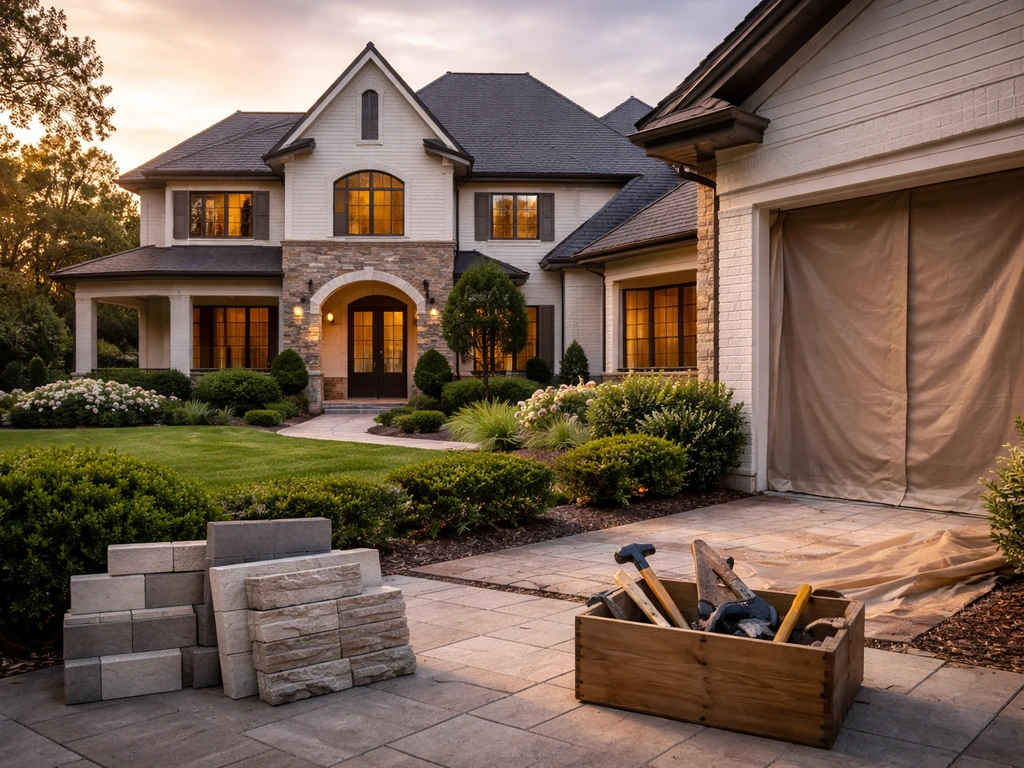
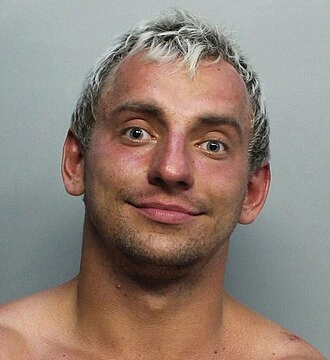
The Sergei Kaminskiy who consistently surfaces in credible English-language sources is a US-based entrepreneur: founder and CEO of the Kaminskiy Group, a San Diego and Carlsbad, California-headquartered family of home-services brands that includes Kaminskiy Design and Remodeling (operating since 2005), Kaminskiy Commercial Construction (founded 2013), and Kaminskiy Care and Repair (launched 2022 as a franchise handyman concept). An official City of Carlsbad document listing active businesses as of May 01, 2026 includes “KAMINSKIY DESIGN AND REMODELING.
”. If you arrived here looking for a different person sharing that name, such as a Ukrainian academic, a minor political figure, or a regional business executive still based in Eastern Europe, this profile will not match. The biographical fingerprints here are clear: San Diego metro base, home remodeling industry, immigrant-founder narrative, and a high-profile Alabama mansion purchase announced in late 2025.
Kaminskiy himself has built a public persona around the immigrant-to-entrepreneur story, and that story is now well documented across business press, franchise directories (including Entrepreneur.com's franchise listings), and the Better Business Bureau. He is relevant to this database not as a post-Soviet power broker but as an example of the post-Soviet diaspora entrepreneurial class: individuals who left the former Soviet space, built privately held businesses in the West, and have accumulated measurable but largely unaudited wealth.
Net worth estimate: the range, the currency, and the date
As of March 2026, the most defensible estimate for Sergei Kaminskiy's net worth sits in the range of $5 million to $20 million USD. The lower bound is anchored almost entirely by the single verifiable asset transaction on record: the December 2025 acquisition of Château de Kaminskiy, a 68,000-square-foot estate on 27 acres at Shoal Creek Golf and Country Club in Alabama, purchased for $4. 8 million.
That purchase price is documented in a PR Newswire release dated December 30, 2025. The property was originally constructed in 1997 at an estimated cost of $26 to $30 million, meaning Kaminskiy acquired a heavily depreciated trophy asset at a fraction of its original build cost, which is a financially sophisticated move but also one that inflates the perception of asset scale.
The upper bound of $20 million reflects reasonable assumptions about the cumulative enterprise value of his privately held business portfolio, his social media monetization income, and undisclosed liquid assets, none of which are publicly audited. This is a wide range, and that width is intentional. Privately held service businesses in the US home-improvement sector are notoriously difficult to value from the outside, and Kaminskiy has not published financial disclosures. Treat the midpoint of roughly $10 to $12 million as the working estimate, but hold it loosely.
How this estimate is built: sources and methodology

Transparency is the only thing that separates a credible wealth estimate from a rumor. Here is exactly what this estimate draws on and where the gaps are.
The most concrete data point is the Alabama property transaction. Real estate purchases in the United States are typically recorded in county deed records and, in this case, corroborated by a press release attributed to the Kaminskiy Group. The $4.8 million figure is the purchase price, not the current market value, and it does not account for any mortgage or financing attached to the acquisition. If the property was purchased with significant leverage, the equity contribution could be far smaller than $4.8 million.
For business valuation, the methodology relies on industry-standard revenue multiples for private service companies. Home remodeling and handyman franchise businesses in the US typically trade at 1 to 3 times annual revenue or 3 to 6 times EBITDA in private transactions. Without Kaminskiy Group's actual revenue figures, which are not publicly filed since the companies are privately held, any business valuation is necessarily an assumption.
The EPA TSCA documents from 2019 referencing Kaminskiy Design and Remodeling provide some operational confirmation of the company's existence and regulatory engagement, but not revenue data. EPA’s TSCA-09-2019-0078 Kaminskiy Design Remodeling docket PDF (dated September 26, 2019) is one of those 2019 TSCA filings referencing the company [EPA TSCA documents from 2019 referencing Kaminskiy Design and Remodeling provide some operational confirmation of the company's existence and regulatory engagement](https://www. epa. gov/sites/default/files/2020-10/documents/tsca-09-2019-0078-kaminskiydesignremodeling-carlsbad_ca-2019-09-26.
pdf).
Social media income is estimated using HypeAuditor's analytics for the Instagram account @sergei.kaminskiy, which projected monthly earnings in the range of $16,933 to $23,198 as of February 2026. Annualized, that is roughly $203,000 to $278,000 per year from Instagram alone, based on a model-driven estimate rather than audited income. This is a meaningful income stream but not a wealth-defining one on its own.
The core methodology problem is simple: Kaminskiy's companies are privately held, he files no public financial statements, and the US does not require private business owners to disclose net worth. Every figure above the real estate transaction price is an informed estimate, not a confirmed fact.
Where the money comes from: income streams to understand
Kaminskiy's wealth drivers fall into four identifiable categories, each with different certainty levels.
- Home remodeling and design (Kaminskiy Design and Remodeling, active since 2005): This is the oldest and likely most profitable arm of the group. Residential remodeling is a high-margin business in the California market, and 20-plus years of operation suggests a stable client base and brand equity.
- Commercial construction (Kaminskiy Commercial Construction, founded 2013): Commercial projects typically carry larger contract values than residential work, though margins vary significantly by project type and competitive bid environment.
- Franchise licensing and royalties (Kaminskiy Care and Repair, launched 2022): Franchise models generate royalty income on franchisee revenue, typically 5 to 8 percent of gross sales, plus initial franchise fees. The size of the Kaminskiy Care and Repair franchise system is not publicly disclosed, so the royalty income is unknown, but Entrepreneur.com's listing of the brand as an active franchise opportunity confirms it is operational.
- Social media and influencer income: The HypeAuditor estimate of $16,933 to $23,198 per month from Instagram suggests a meaningful content monetization effort, likely tied to brand partnerships in the home-improvement or lifestyle space.
- Real estate investment: The Alabama mansion acquisition, at $4.8 million for a property with a $26 to $30 million original construction cost, indicates an appetite for distressed or undervalued real estate assets.
Assets and holdings: what is actually on the record
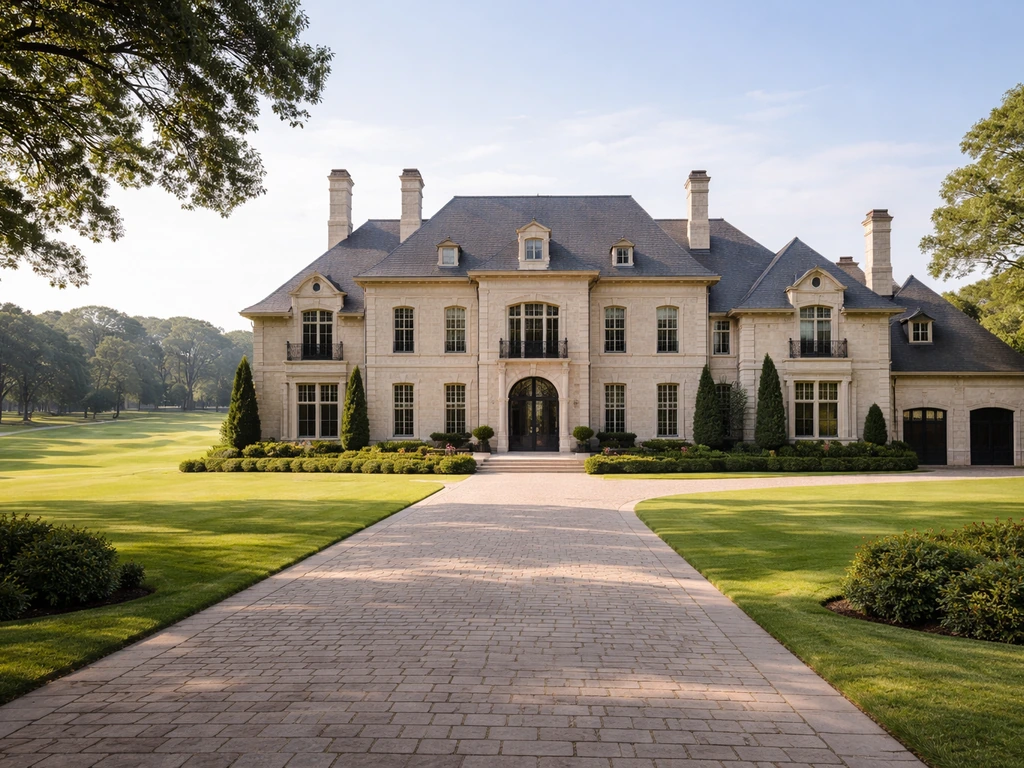
The most publicly documented asset is Château de Kaminskiy, the 68,000-square-foot estate in Alabama's Shoal Creek Golf and Country Club, acquired in December 2025 for $4.8 million. The property sits on 27 acres and was built in 1997 at an estimated original cost of $26 to $30 million. Acquiring it at roughly 16 to 18 cents on the original construction dollar is a significant discount, and the property's carrying costs, taxes, maintenance, and insurance on a 68,000-square-foot structure, will be substantial regardless of acquisition price.
Beyond the Alabama property, Kaminskiy's operational base is in the San Diego and Carlsbad, California area, where Kaminskiy Group maintains its corporate presence. California real estate holdings, if any, are not publicly documented in available sources. The group's business assets include the brand equity and client relationships of three distinct operating companies, potential franchise agreements and fee streams from Kaminskiy Care and Repair, and whatever equipment, vehicles, and working capital are tied up in the construction and remodeling operations.
There is no public record of stock market holdings, cryptocurrency positions, or other financial investments, though these cannot be ruled out. Privately held business owners in his revenue bracket frequently hold diversified investment portfolios, but without disclosure, these remain invisible to outside analysis. Sergey Veremeenko's net worth profile offers a useful comparison point for how privately held business assets from the post-Soviet world get evaluated when documentation is thin.
Controversies, legal context, and anything that could move the number
There are two blank" rel="noopener noreferrer">EPA TSCA (Toxic Substances Control Act) documents from 2019 that reference Kaminskiy Design and Remodeling and Sergei Kaminskiy directly. These relate to regulatory filings dated September 26, 2019 and October 17, 2019, originating from the San Diego and Carlsbad area. TSCA filings in the construction and remodeling sector typically relate to lead paint or asbestos compliance, which are routine regulatory touchpoints for residential contractors rather than indicators of serious legal exposure. However, any enforcement action from those proceedings, fines, consent orders, or required remediation, could represent a liability on the balance sheet. Without access to the full case resolution, the financial impact cannot be quantified.
There is no public record of sanctions, asset freezes, or international enforcement actions against Kaminskiy. He does not appear on OFAC's SDN list, EU sanctions registers, or UK sanctions frameworks as of March 2026. This is consistent with his profile as a US-based private entrepreneur rather than a post-Soviet political or financial figure. Unlike subjects such as Sergey Lavrov, whose wealth is entangled with Russian state power and Western sanctions, Kaminskiy's legal environment is primarily domestic US regulatory and commercial law.
One area worth watching is franchise litigation risk. Franchise systems, especially newer ones like Kaminskiy Care and Repair (launched 2022), are frequently subject to disputes between franchisors and franchisees over territory rights, support obligations, and royalty calculations. No such suits are currently visible in public court records, but this is a standard caveat for any growing franchise operation.
How to verify or update this estimate yourself
If you want to stress-test this number or update it when new information emerges, here is the practical playbook.
- Check Alabama and California county deed records: Real estate transactions are public in both states. Jefferson County, Alabama (where Shoal Creek is located) and San Diego County, California (where the Kaminskiy Group operates) will have deed transfers, assessed values, and any mortgage liens on file. These are searchable online through county assessor and recorder portals.
- Search California Secretary of State business filings: Kaminskiy Design and Remodeling, Kaminskiy Commercial Construction, and Kaminskiy Care and Repair Inc are California-registered entities. Their filing status, registered agent, and sometimes officer names are publicly searchable at businesssearch.sos.ca.gov. This will not give you revenue figures but will confirm corporate structure and any registered subsidiaries.
- Review PACER (federal court records) and state court databases: Search for Kaminskiy, Kaminskiy Group, or the individual company names. Civil suits, bankruptcy filings, or EPA enforcement orders would appear here.
- Check EPA ECHO (Enforcement and Compliance History Online): This database tracks regulatory actions under TSCA and other environmental statutes. Searching for Kaminskiy Design and Remodeling will show whether the 2019 TSCA proceedings resulted in penalties or consent orders.
- Monitor the BBB profile and franchise disclosure documents: Franchise disclosure documents (FDDs) are legally required in the US and must be filed with state franchise regulators. Kaminskiy Care and Repair's FDD, if available through your state's franchise regulator, will include audited financials for the franchisor entity, which is the closest thing to a verified income statement you will find.
- Cross-reference social media analytics tools: HypeAuditor, Social Blade, and similar platforms update their Instagram earnings estimates monthly. These are model-based, not verified, but they track directional trends in influencer income.
- Treat press releases with appropriate skepticism: The PR Newswire release about the Alabama mansion is a useful data point but is a self-issued document. Verify the transaction independently through county deed records before treating the $4.8 million figure as confirmed.
The red flags to watch for in any third-party Kaminskiy net worth claims are round numbers without sourcing (claims of $50 million or $100 million with no asset basis), conflation with other individuals sharing the name, and any assertion of post-Soviet political connections that cannot be verified through public records. This profile is a US-based private entrepreneur, and the wealth evidence matches that profile: real estate transactions, franchise filings, regulatory records, and social media analytics. If a source claims something dramatically different, ask for the primary document behind the claim.
Putting it in perspective
Kaminskiy's estimated $5 million to $20 million range puts him firmly in the upper tier of US small-to-mid-size business owners, but well below the threshold of the billionaire or even centimillionaire class that dominates most post-Soviet wealth profiles. For comparison, Sergey Kovalev's net worth, built through professional boxing, sits in a broadly comparable bracket, illustrating how wealth at this scale is shaped more by business execution and asset accumulation than by political access or resource extraction. Kaminskiy's story is more American small-business success than oligarch-class accumulation, which is exactly why the evidence base looks the way it does: granular, domestic, and largely transparent to anyone willing to pull the right public records.
| Data Point | Source Type | Confidence Level | Notes |
|---|
| Alabama mansion: $4.8M purchase price (Dec 2025) | PR Newswire / deed records | High (verify via county records) | Purchase price, not market value; financing terms unknown |
| Business portfolio valuation: $3M–$15M estimated | Industry revenue multiples | Low–Medium | No audited financials available for private companies |
| Instagram income: $203K–$278K/year (Feb 2026) | HypeAuditor model estimate | Low–Medium | Model-based, not audited; fluctuates with follower engagement |
| EPA TSCA regulatory exposure (2019) | Federal regulatory database | Medium | Outcome of proceedings not fully documented in public sources |
| Franchise system value (Kaminskiy Care and Repair) | FDD filings (state regulators) | Low | FDD financials not yet reviewed; franchise system size unknown |