The most credible estimates place each of the Bogdanoff twins, Igor and Grichka, at somewhere between €1 million and €5 million in individual net worth at their peak, with a combined household estimate often cited in the €2 million to €8 million range depending on how property and shared assets are counted. Those numbers are not verified by tax filings or official declarations. They are modeled from documented income streams, one confirmed real-estate acquisition, a corporate paper trail, and reported book advances. The honest answer is that nobody outside their estate lawyers knows the real figure, and some reporting from their final years actively suggests the brothers faced financial strain rather than the lavish wealth their public image implied.
Igor and Grichka Bogdanoff Net Worth: Estimated Wealth Explained

Who were the Bogdanoff twins and where did the money come from?

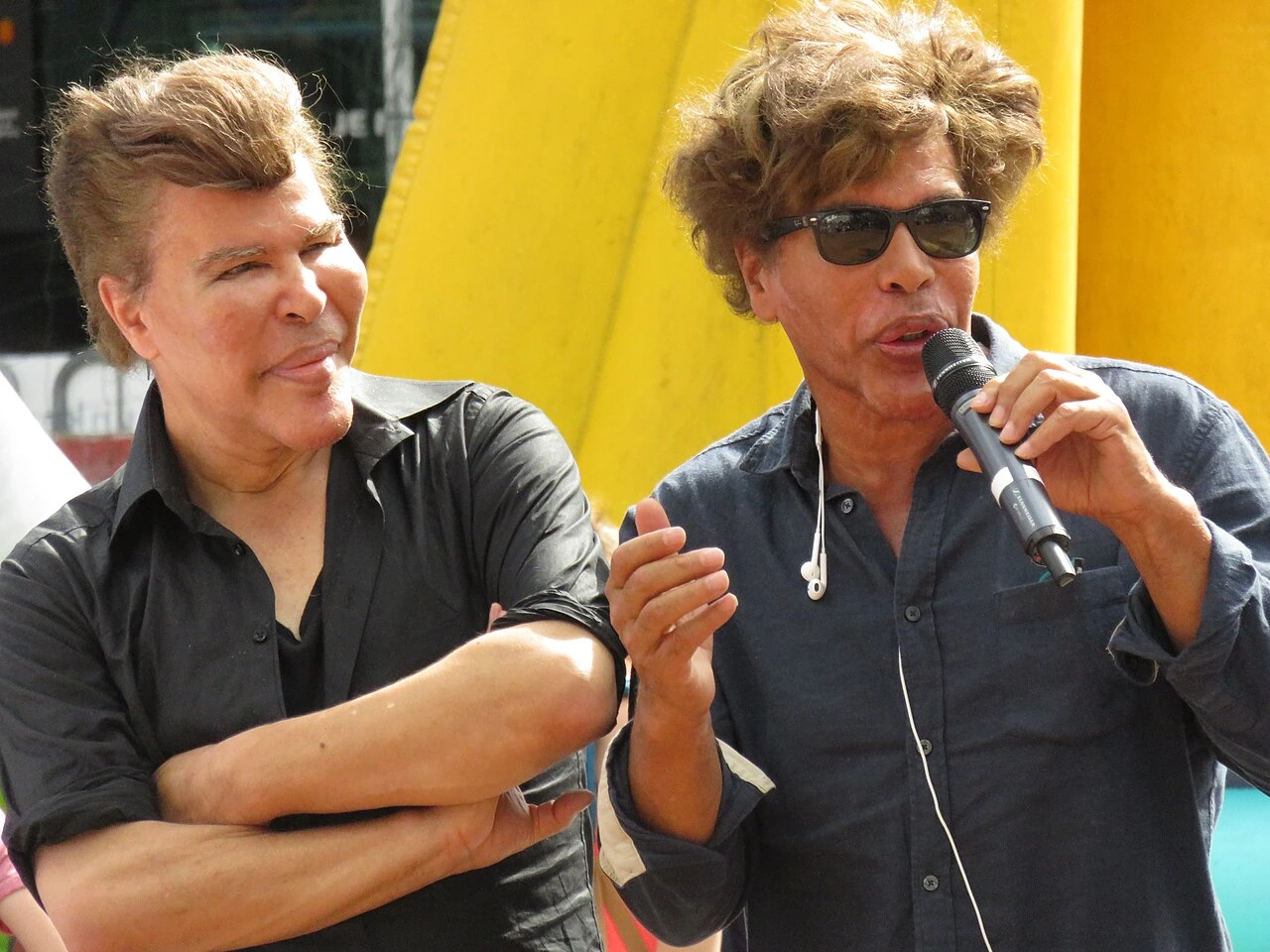
Igor and Grichka Bogdanoff were French twin brothers who built their careers as science-entertainment personalities, TV presenters, authors, and producers. Their public breakthrough came on April 21, 1979, when they appeared on TF1's 'Temps X,' a science-fiction and popular science program that made them recognizable faces in French households. From there they produced and presented 'L'Odyssée du Futur' starting around 1982 and later 'Futur's,' a weekly broadcast that ran from 1990. For roughly two decades they were among the most visible faces of science communication on French television, and that visibility translated into income across several channels.
Their income streams, as best as public information allows us to reconstruct them, fell into a few categories. First, TV presenter and producer fees across their TF1 years. Second, a sustained publishing career that stretched well beyond their peak TV period: books like 'La fin du hasard' (published by J'ai lu in 2014) document their continued output, and Boursorama reported their own claim that book advances ranged between €40,000 and €180,000 per title depending on projected sales.
Third, corporate interests including a company called 'The Big Bang Company SAS,' with Igor listed in a management role, which suggests some entrepreneurial activity tied to their science-media brand. None of these income streams are the kind that generate oligarch-level fortunes, and that context matters enormously when interpreting the numbers floating around online.
What 'net worth' actually means here: personal vs combined, verified vs estimated
Net worth is assets minus liabilities. For public figures who are not required to file public disclosures (and the Bogdanoffs were not politicians or publicly traded executives), every number you see is an estimate built from indirect evidence. It is worth being precise about the different versions of 'net worth' that get conflated in coverage of the twins.
- Personal net worth: what one individual owns minus what they owe, counted separately from any other household member.
- Combined or household net worth: the total of both twins' assets, often reported as a single figure. Because Igor and Grichka reportedly shared a bank account, described by RTL Info as unusual (more typical of spouses than siblings), the line between their individual and shared finances was genuinely blurry.
- Verified net worth: a figure backed by a primary source such as a tax declaration, SEC filing, court proceeding, or Forbes-style investigation with documented asset checks. No verified figure exists for the Bogdanoffs.
- Estimated net worth: a figure modeled from secondary evidence (income indicators, known asset purchases, industry benchmarks). All publicly available Bogdanoff net worth figures are estimates.
The shared bank account and jointly owned property mean that separating Igor's personal net worth from Grichka's is partly a modeling exercise rather than a straightforward lookup. For practical purposes, the most honest framing is to treat available figures as a combined household estimate and then split roughly equally when an individual figure is needed.
What evidence a wealth database actually uses to estimate their figures

Responsible wealth databases, including the methodology documented by platforms that differentiate 'verified' from 'estimated' entries, start with the highest-authority sources available: official filings, court records, Forbes or Bloomberg tracking data, and SEC disclosures where applicable. For French media personalities like the Bogdanoffs, none of those apply. So the evidence chain drops to secondary sources, and here is what actually exists in the public record.
| Evidence Type | Specific Data Point | Confidence Level |
|---|---|---|
| Real estate (documented) | Château d'Esclignac, Gers, purchased 1986 for €280,000; a later offer of €700,000 mentioned in reporting | High (multiple sources confirm) |
| Book advance income (self-reported) | €40,000 to €180,000 per title depending on projected sales (per Boursorama) | Medium (self-reported, no third-party verification) |
| Corporate interests | The Big Bang Company SAS, Igor listed in management role; La Financière du Brabant linked in company records | Medium (public registry confirmed, revenue unknown) |
| TV/production income | TF1 presenter and producer fees across Temps X, L'Odyssée du Futur, Futur's (1979 to 1990s) | Low-medium (no salary figures publicly disclosed) |
| Financial strain reporting | BFMTV reporting of money problems; their own legal statement that they received zero euros in an 'abus de faiblesse' case | Medium (contemporaneous reporting) |
| Shared banking | RTL Info report of a joint bank account between the brothers | High (reported with specific detail) |
The château acquisition is the single hardest asset anchor in the public record. blank" rel="noopener noreferrer">Purchased for €280,000 in 1986 and later reported as visibly deteriorating, it tells a complicated story: the asset existed, it appreciated on paper (with a €700,000 offer cited in one source), but its physical decline also suggests capital was not being reinvested in its upkeep. That is not the behavior of people managing a large, well-maintained portfolio.
Igor Bogdanoff: individual net worth estimate and reasoning
Igor Bogdanoff died on January 3, 2022, from complications related to COVID-19.
Estimating his personal net worth at the time of death is complicated by the jointly held assets, but working through what is documented: his share of the Château d'Esclignac at market value (using the €700,000 reference figure, his half would be approximately €350,000), accumulated book advance income over several decades of publishing, fees from his corporate role at The Big Bang Company, and TV earnings across his TF1 career.
Applying a conservative multiplier for savings and other undocumented assets, a reasonable estimate for Igor's individual net worth at or near his death is in the range of €1 million to €3 million. That is not a precise figure. It is a modeled range with meaningful uncertainty on both sides.
What pulls the estimate downward: the money problems reported by contemporaries, the legal claim that they received no payment in a disputed case, the deteriorated state of the château suggesting limited maintenance capital, and the absence of any documented high-value secondary assets (no verifiable investment portfolio, no publicly documented luxury real estate beyond the Gers property, no business revenues on record). What pulls it upward: a multi-decade career in high-profile French television, continued publishing income well into the 2010s, and corporate registration activity suggesting ongoing business ambitions.
Grichka Bogdanoff: individual net worth estimate and reasoning

Grichka Bogdanoff died on December 28, 2021, less than two weeks before his brother. Because the two shared finances so closely, including the joint bank account and the jointly owned château, Grichka's individual net worth follows the same evidential trail as Igor's with essentially identical inputs. His publishing output is independently documented through author listings, and his TF1 career ran in parallel with Igor's throughout.
There is no public evidence that Grichka held significantly more or less wealth than his brother independently. A reasonable individual estimate for Grichka is also in the €1 million to €3 million range, leading to a combined household estimate of roughly €2 million to €6 million, with the château representing a meaningful share of whatever that total was.
It is worth noting that some secondary sources list much higher figures for the twins, with numbers like €10 million or even higher appearing on aggregator-style net worth sites. Those figures are not supported by any traceable primary evidence and should be treated as speculation. The documented income indicators simply do not support an eight-figure fortune.
What the internet gets wrong about Bogdanoff wealth
The Bogdanoffs became meme figures in online culture largely because of their dramatically altered appearance, and that cultural notoriety has inflated assumptions about their wealth. The logic runs: famous people on TV with a distinctive lifestyle must be rich. But that is not how media income works, especially for niche science-entertainment presenters whose peak years were the 1980s and 1990s in France, not a global streaming era.
- Myth: The Bogdanoffs were extremely wealthy, with net worths in the tens of millions. Reality: No documented evidence supports figures above €5 million for either twin, and financial strain was reported by people close to them.
- Myth: Their combined assets include significant investment portfolios or undisclosed luxury properties. Reality: The only documented property acquisition is the Château d'Esclignac, purchased for €280,000 in 1986.
- Myth: 'Net worth estimates' on aggregator websites reflect verified data. Reality: The vast majority of those sites model from assumed industry averages or simply copy each other without primary sourcing.
- Myth: Their corporate interests (The Big Bang Company, La Financière du Brabant) imply substantial business wealth. Reality: Company registration confirms existence, not revenue. French public registry listings do not disclose income or valuation.
- Myth: The 'abus de faiblesse' legal case confirms they had access to large sums. Reality: They explicitly denied receiving any payment in that context, and the case does not establish wealth levels.
The BFMTV reporting that included testimony about money problems is a useful corrective to the viral 'rich twins' narrative. Some net-worth sites also discuss Emmanuel Straschnov, but those figures are likewise only as credible as the underlying evidence trail Emmanuel Straschnov net worth. It aligns more closely with what the asset evidence actually shows: a comfortable but not extravagant financial profile, likely eroded by the costs of cosmetic procedures, legal proceedings, and an unmaintained château.
How to verify and update Bogdanoff wealth figures yourself

If you are researching the Bogdanoffs for journalistic, financial, or reference purposes, here is a repeatable checklist for approaching their net worth responsibly. The same method works for estimating the wealth of other media figures with limited public disclosure, including comparable European science-entertainment or cultural personalities.
- Start with the asset anchor. For the Bogdanoffs, the Château d'Esclignac is the only publicly documented major asset. Check French property registers (cadastre.gouv.fr or notarial records) for any updates, sales, or transfers. As of reporting around 2022, the estate was involved in inheritance proceedings.
- Check corporate registries. Use Pappers.fr or Infogreffe.fr to look up The Big Bang Company SAS and La Financière du Brabant. These will show filing status, registered capital (which is often minimal and not a revenue indicator), and changes in officers.
- Search for legal proceedings. Court records in France are partially public. Any 'abus de faiblesse' or inheritance litigation may surface asset disclosures that were not previously public.
- Audit the publishing trail. Use Livres Hebdo, BNF catalogue, or Amazon.fr to catalog their book output. Cross-reference with the reported advance range of €40,000 to €180,000 per title to estimate cumulative publishing income.
- Triangulate with industry benchmarks. French TV presenter fees for TF1 in the 1980s and 1990s were typically in the range of tens of thousands of euros per year for regular presenters, not hundreds of thousands. Apply realistic multipliers rather than American celebrity salary assumptions.
- Weight financial strain reporting. BFMTV and other contemporaneous outlets reported money problems near the end of their lives. That reporting should reduce, not increase, your central estimate.
- Discount non-sourced aggregator figures. If a net worth site does not cite a specific document, case, or investigation, treat their number as a placeholder, not a data point.
- Monitor estate proceedings. As inheritance cases progress through French courts, additional asset disclosures may become publicly available. Check RTL Info, Le Figaro, and BFMTV archives for ongoing coverage.
One structural note on methodology: because the Bogdanoffs shared finances so tightly, any figure you find is more accurately described as a household or estate estimate rather than a cleanly separated individual number. When a source quotes 'Igor Bogdanoff net worth' or 'Grichka Bogdanoff net worth' as distinct figures, ask whether they have actually done the work of separating jointly held assets or whether they have simply divided a household estimate by two. As a result, claims about Grigor Dimitrov net worth should be cross-checked in the same way, using primary or traceable evidence rather than aggregator numbers Igor Bogdanoff net worth. Most have not.
Putting the numbers in context
A combined household estimate of €2 million to €6 million puts the Bogdanoffs in the comfortable upper-middle tier of French media personalities from their era, not the ultra-wealthy category. For comparison, that range is consistent with a long career in national TV presenting and authorship without blockbuster single transactions or equity-level business exits. It is a different category from the kind of wealth profiled in post-Soviet oligarch contexts, where documented figures often run into hundreds of millions tied to resource extraction, banking, or privatization windfalls. The Bogdanoffs' wealth story is ultimately a European media career story: steady income over decades, one property investment, a corporate paper trail, and a public image that outpaced the underlying financial reality.
For those researching similar figures in the science-intellectual-media space, such as celebrated mathematicians or cultural entrepreneurs whose public profiles suggest wealth without obvious commercial engines, the same evidential discipline applies: anchor to documented assets, apply realistic income benchmarks for the sector and era, and weight contemporaneous reporting over retroactive aggregator estimates. If you are comparing this kind of estimated-wealth process to a more mainstream celebrity math narrative, see how grigori perelman net worth is discussed with similar emphasis on limited primary disclosure.
FAQ
Why do some sites claim “Igor and Grichka Bogdanoff net worth” is €10 million or more when the article estimates a much lower range?
Most higher numbers come from aggregator-style “celebrity net worth” methods that are not tied to traceable assets, court outcomes, or documented income. Without verifiable financial anchors (public filings, court-ordered valuations, or audited business records), those figures tend to scale their estimates based on fame level and image rather than evidence.
Is “net worth” here meant to be Igor’s personal wealth or the twins’ combined household estate?
Because the brothers shared finances closely (joint holdings and at least one jointly referenced major property), many published “Igor net worth” and “Grichka net worth” figures are effectively household estimates presented as individual numbers. A more accurate approach is to treat the range as estate or household wealth, then split only when a source explicitly explains the separation method.
How should I compare Igor vs Grichka net worth claims if both were linked to the same château and bank account?
Look for whether the claimant (1) identifies the ownership split of the property, (2) uses a specific valuation reference, and (3) states how shared income or savings were allocated. If they just divide a household figure by two without explaining the inputs, their “separate” numbers are likely model assumptions rather than evidence.
Does the château purchase price of €280,000 mean their net worth should be around that amount today?
Not necessarily. Purchase price is only the starting point. The more relevant questions are (1) current market value used by the estimator, (2) ownership percentage, (3) whether maintenance costs were sustained or capital was diverted elsewhere, and (4) any legal or liability burdens affecting value. Decline of the property can reduce effective net realizable value even if a prior offer existed.
If they had TV and book income, why wouldn’t that automatically translate into a large fortune?
High media visibility does not guarantee compounding wealth. Presenter and publishing revenues can be offset by taxes, living costs, production expenses, legal costs, and lifestyle spending (for example, cosmetic procedures). Without documented high-return investments or major equity events, income may sustain comfort but not build eight-figure assets.
What are common mistakes when estimating net worth for non-public figures like the Bogdanoffs?
The biggest mistakes are assuming fame equals liquidity, treating unverified “net worth” aggregators as if they were evidence, ignoring joint-asset allocation (which can misstate individual figures), and failing to distinguish “gross earnings” from “net worth” (which must subtract liabilities and consider savings behavior).
How can I sanity-check whether a net-worth range is plausible for a French media personality from the 1980s to 2010s?
Cross-check three things: documented income signals (publisher advance reports, identifiable corporate roles, and known TV tenure), at least one concrete asset anchor (property or clearly evidenced investments), and contemporaneous reporting that indicates whether the person had financial stress. If none of these supports the high end of a claimed range, treat it as speculative.
If I only need a number for quick use, what is the safest way to present “Igor and Grichka Bogdanoff net worth”?
Use the combined household or estate range and specify it is an estimate based on indirect evidence, not a verified financial statement. If you present separate “Igor net worth” and “Grichka net worth” numbers, disclose that they rely on an assumed split of jointly held assets.
Do legal disputes and unpaid claims typically reduce net worth estimates, and how should they be handled?
Yes. If reporting indicates they received no payment in a contested case, that reduces the estimated income side used by models and can also introduce legal costs. The practical effect is usually a downward adjustment to both near-term cash accumulation and the probability of having large liquid reserves later.