
Based on official Russian financial disclosures and credible investigative reporting available as of July 2026, Sergei Sobyanin's declared annual income sits around 13. 3 million rubles (roughly $145,000–$160,000 USD at mid-2020s exchange rates), with total declared assets that are modest on paper but almost certainly incomplete. A reasonable best estimate for his net worth lands in the $5 million to $20 million range, though the true figure could be substantially higher given the opacity typical of senior Russian political figures.
Sergey Sobyanin Net Worth: Estimate, Sources, and How It’s Calculated

Dmitri Volkov
5 Jul 2026
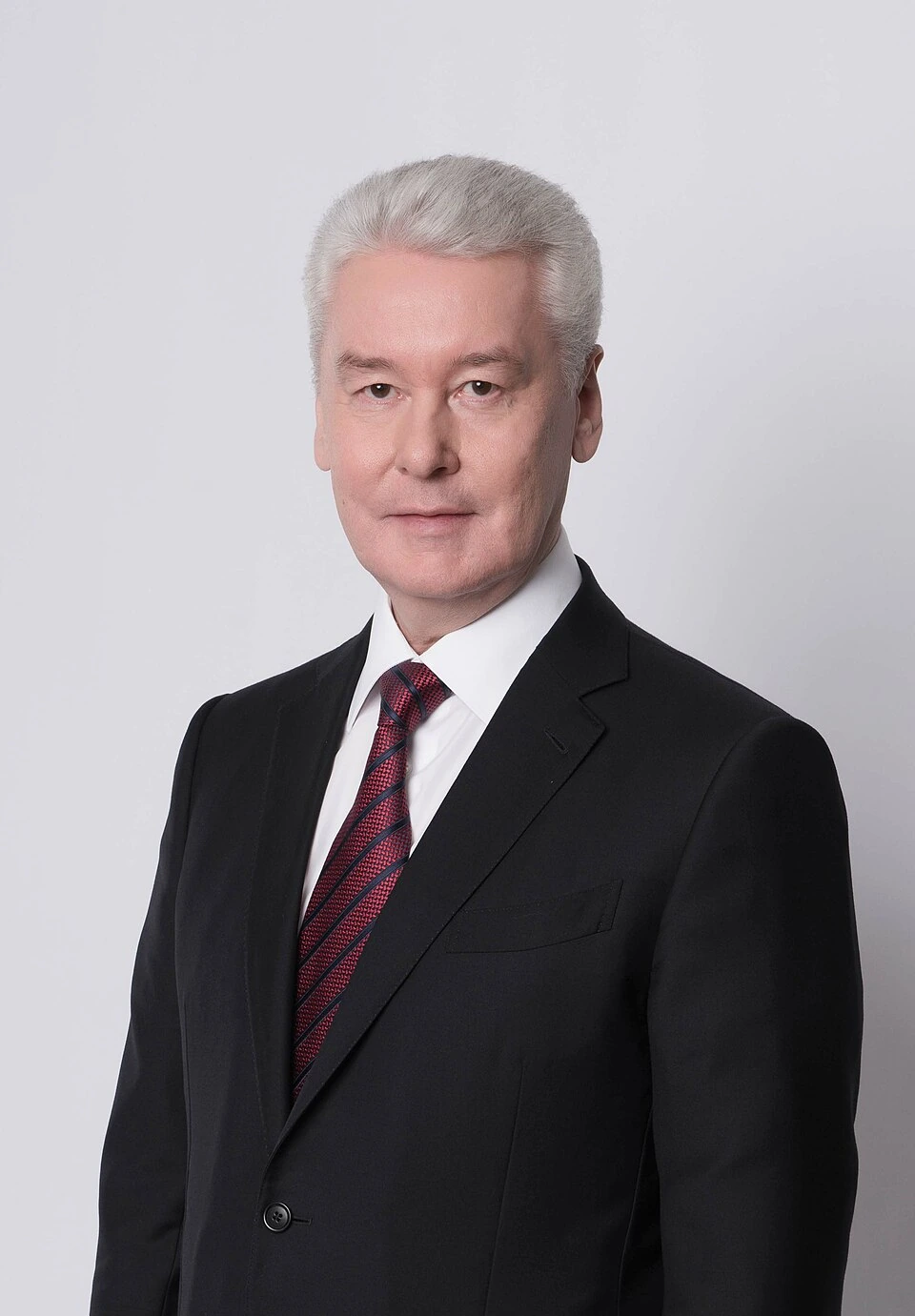
This article explains exactly how that estimate is built, where the numbers come from, and how you can check them yourself today. If you are looking specifically for Sergey Young net worth, this same disclosure-and-method approach can help you separate verified figures from marketing claims.
Who Sergei Sobyanin is and why his wealth estimate matters
To be clear upfront: this profile is about Sergei Semyonovich Sobyanin, born June 21, 1958, who has served as Mayor of Moscow since October 21, 2010. He is not to be confused with any other individuals sharing a similar name. Sobyanin is one of Russia's most prominent and durable political figures, having held senior federal positions long before taking the Moscow job. His career arc includes serving as Governor of Tyumen Oblast from 2001 to 2005, Head of the Presidential Administration from 2005 to 2008, and Deputy Prime Minister from 2008 to 2010. Each of those roles placed him at or near the center of Russian federal power.
Wealth estimates for a figure like Sobyanin matter for several reasons beyond simple curiosity. As mayor of Moscow, he oversees a city budget measured in the trillions of rubles and controls infrastructure, real estate, and contracting decisions that shape one of the world's largest urban economies. His proximity to the Kremlin over more than two decades, combined with the documented patterns of asset accumulation among senior Russian officials, makes understanding his financial profile genuinely relevant to anyone tracking post-Soviet political economy. For journalists, researchers, or finance enthusiasts, his case is also a useful case study in how official disclosure frameworks in Russia operate in practice.
The best net worth estimate and why it has a wide range

The most defensible estimate for Sobyanin's net worth as of mid-2026 is somewhere between $5 million and $20 million USD, with a reasonable central estimate around $8 million to $12 million. You can also look up how analysts discuss the said Sergeyevich net worth estimates in light of those same disclosure constraints. This range reflects what is actually documentable from public sources, layered with conservative assumptions about undisclosed holdings. At the lower end, you have essentially what his official declarations suggest. At the higher end, you factor in the kinds of indirect asset structures, family holdings, and prior-role accumulation that investigative outlets have documented in similar senior Russian official profiles.
Some websites you will encounter throw out much larger numbers, occasionally in the $50 million to $100 million range. Some online claims even compare these figures to estimates for Sergei Portnov net worth, but they still remain unverified without reliable documentation $50 million to $100 million. Those figures are almost always unsourced speculation extrapolated from his political influence rather than verified assets. On the other side, taking his declared income at face value and calling it the whole story would be naive given the well-documented gaps in Russia's official disclosure system. The range above tries to be honest about both problems.
How the estimate is built: the methodology
Estimating net worth for a Russian political official is a layered process. For Sobyanin specifically, here is how a transparent estimate gets constructed from the ground up.
- Start with official income declarations: Sobyanin declared earnings of 13.3 million rubles for 2022, as published by the Moscow City Election Commission (МГИК) in the context of the 2023 mayoral election cycle. This is verifiable from Kommersant and Interfax reporting on the МГИК disclosure PDFs.
- Convert to USD using the prevailing exchange rate: At roughly 90 rubles per dollar (mid-2020s average), 13.3 million rubles translates to approximately $148,000. This is his official annual salary-level income from public service.
- Assess declared property and assets: Russian officials are required to disclose real estate, vehicles, bank account balances, and securities holdings. Sobyanin's declarations across election cycles have included property holdings and bank accounts, but details shift between cycles.
- Apply a multiplier for career accumulation: Sobyanin has held senior paid roles since 2001. Even at declared salary levels across 20-plus years in government, accumulated savings alone would be meaningful. Add any pre-government private-sector or regional business connections from his Tyumen years.
- Cross-reference against investigative reporting: Outlets like Mozhem Obyasnit and The Moscow Times have examined senior officials' undisclosed holdings. Sobyanin has not been the subject of a major dedicated investigation comparable to some oligarch profiles, but the general pattern of underdisclosure by senior officials informs the upward adjustment in the estimate.
- Flag the uncertainty: Because Russia's full declaration data has been partially removed from public websites after a Putin decree changed online publication requirements, some historical disclosure data is harder to access today than it was five years ago.
Where to look today: primary sources you can check right now

If you want to verify the underlying data yourself rather than trust any single website, here are the concrete sources to consult as of July 2026.
- Moscow City Election Commission (МГИК) official site (moscow_elections.ru or its current domain): Search for 'сведения о доходах кандидатов' (income information of candidates) for the 2023 Moscow mayoral election. The commission publishes PDF declarations for all registered candidates including Sobyanin.
- Declarator (declarator.org): This project, run by Transparency International Russia, aggregates publicly published income and property declarations submitted under Russian anti-corruption rules, including election-candidate declarations and annual civil service disclosures. Search 'Собянин' to pull up his records across years.
- Rossiyskaya Gazeta and МГИК archives: Both Rossiyskaya Gazeta and Interfax have reported on declaration disclosures going back to the 2012 mayoral election cycle, giving you a multi-year baseline.
- Kommersant and RBC: Both Russian business outlets have reported directly on the МГИК-published figures, so a search for 'Собянин доходы декларация' on their sites will surface the most reliable secondary sourcing.
- The Moscow Times: For investigative context on why some older declarations are no longer easily accessible online (the post-Putin-decree removal of historical declarations), The Moscow Times reporting on this policy change is useful background.
- Russian government official biography pages: The Moscow city government's official mayor page lists his career chronology, which helps you anchor income-period calculations.
Income vs assets: where the wealth likely comes from
Sobyanin's declared income is almost entirely from public service salary. At 13.3 million rubles in 2022, his official compensation is notably higher than an average Russian civil servant but modest by global city-mayor standards. For context, that is roughly equivalent to what a mid-level manager earns in Western Europe. As Moscow mayor, he does receive additional perquisites of office (official housing, transportation, security) that do not appear as income on declarations but represent significant real-world economic value.
The more interesting wealth question is what accumulated before or alongside the official salary. Sobyanin spent years as governor of Tyumen Oblast, one of Russia's most oil-rich regions, a period when regional governors had significant latitude over local economic relationships. There is no credible published evidence of direct business ownership traceable to him, but the Tyumen years represent a period of maximum opportunity for asset accumulation that is hard to audit from public records. His federal roles from 2005 to 2010 similarly placed him in a position of broad economic influence.
On the asset side, declarations have included real estate holdings, which is typical for senior officials. Vehicles and bank account balances are also part of the standard declaration. What declarations typically do not capture are holdings via family members beyond immediate spouse disclosures, or assets held through structures that do not require individual-level reporting. This is a known gap in Russia's anti-corruption disclosure framework, not speculation specific to Sobyanin.
What the public record actually shows, and what it doesn't
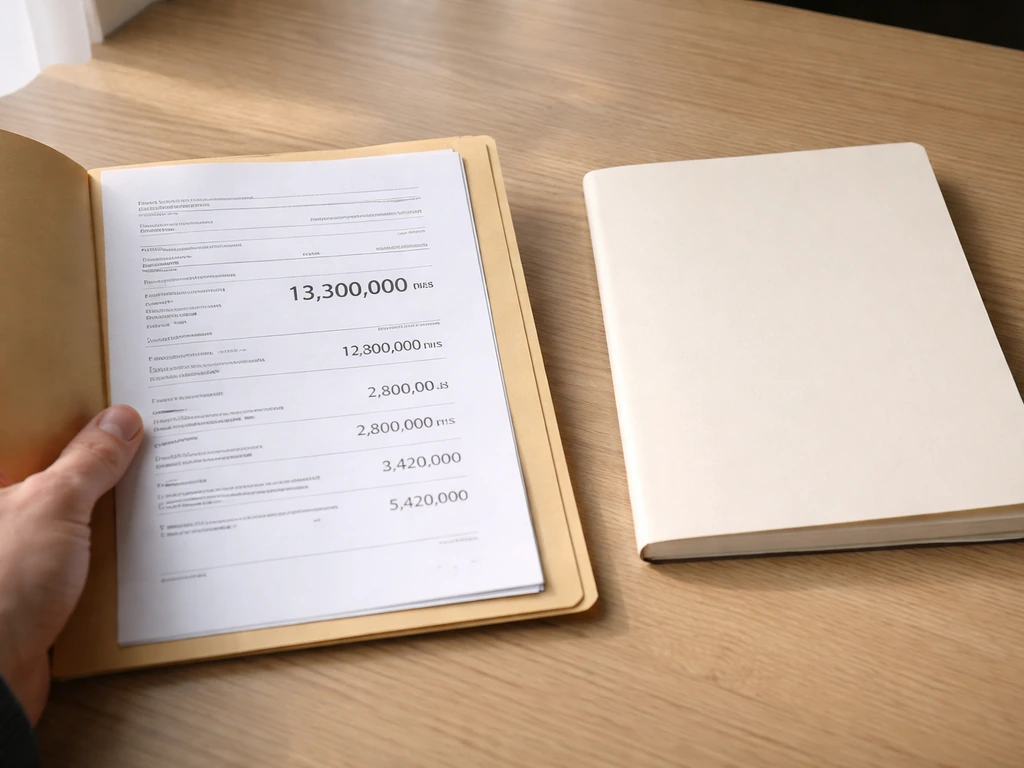
The clearest documented fact is the 13.3 million ruble income figure for 2022, reported by both Kommersant and Interfax citing МГИК disclosure PDFs. Earlier election cycles (2012 in particular) generated similar disclosure events, with Rossiyskaya Gazeta and Moskva Agency both reporting on the МГИК's official publication of candidate income and expense data. This gives a documented income baseline spanning roughly a decade.
What the record does not show is any significant investment portfolio, business equity, or offshore holdings. The absence of these in declarations does not mean they do not exist; it means they are either not held in forms that require disclosure or are genuinely absent. For a figure of Sobyanin's seniority and tenure, the absence of visible wealth complexity is itself worth noting. It either reflects genuine modesty (possible but uncommon at this level in Russian politics), effective structuring of assets outside disclosure requirements, or a combination of both.
One important structural caveat: a 2022 Putin decree changed requirements for online publication of officials' declarations. The Moscow Times reported that historical declarations began disappearing from government websites as a result, though subsequent amendments restored some access. This means that even diligent searches today may not surface complete historical records, and the gap in the archival record should be understood as a policy artifact, not evidence that declarations were never filed.
How to evaluate and compare claims across websites
If you search for Sobyanin's net worth across the web, you will get a wide range of figures. If you are looking specifically for Sergey Sobyanin’s sergey net worth figure, start with the $5 million to $20 million estimate and verify the underlying public disclosures discussed here. Here is a practical checklist for evaluating any claim you come across.
| Claim type | Red flags | Green flags |
|---|---|---|
| Specific large number (e.g., $100M+) | No source cited, no methodology, no date | Linked to specific declaration, investigative report, or credible outlet with named journalist |
| Salary-only estimate | Ignores career history, asset declarations, perquisites | Clearly labeled as income-only, not total net worth |
| Range with stated methodology | Range is implausibly wide (e.g., $1M to $500M) | Range reflects declared assets at low end and reasonable undisclosed-asset assumptions at high end |
| Celebrity/gossip site figure | No Russian-language primary source, generic biography format | Cites МГИК PDFs, Declarator, or named Russian business outlets |
| Investigative outlet estimate | Published before 2020 without 2022 declaration update | Includes 2022 or 2023 declaration data, explains methodology |
The most reliable starting point is always the МГИК PDF for the most recent election cycle combined with the Declarator database. If a site's number cannot be traced back to either of those or to a named investigative piece, treat it as unverified speculation. For comparison, wealth profiles of other Sergei-named figures in Russian public life (from political operators to tech entrepreneurs) follow the same rule: the declaration-to-estimate chain matters enormously, and figures without that chain should be discounted. If you are comparing figures like Sergey Stepánov for net worth, the same rule applies: confirm the declaration-to-estimate chain before treating any website number as credible wealth profiles of other Sergei-named figures.
The bigger picture: wealth transparency for senior Russian officials
Sobyanin's case fits a recognizable pattern in post-Soviet political wealth: official records that are technically public but practically difficult to access in full, income figures that are credible as far as they go but incomplete as a picture of total wealth, and a career trajectory through resource-rich regions and federal power centers that creates plausible but undocumented accumulation. This is not unique to him. It reflects the structural constraints of Russia's disclosure environment, where anti-corruption rules exist on paper but enforcement and accessibility are inconsistent. If you are also looking for Sergei Protosenya net worth, remember that the same disclosure gaps and verification standards can strongly affect any wealth estimate Russia's disclosure environment.
For readers using this as a research starting point, the most useful frame is to treat the $5 million to $20 million range as a working hypothesis grounded in what is verifiable, while acknowledging that the true figure is genuinely unknown. The declared income at 13.3 million rubles annually is the one hard number in the public record. Everything above that is inference, and honest inference requires being transparent about the gap between what is documented and what is assumed. If you are specifically looking for estimates of Sergey Petrossov net worth, you can use the same disclosure-to-evidence approach to compare reported claims against primary records.
FAQ
Why do so many sites publish Sergey Sobyanin net worth figures that are much higher than the article’s $5 million to $20 million range?
Most inflated numbers are calculated by extrapolating from political influence or from unrelated individuals with similar names, without reconstructing the declaration-to-evidence chain (income and asset lines) the article describes. If a claim cannot be traced to a specific election-cycle disclosure document or a named investigative report, treat it as marketing-level speculation rather than a usable estimate.
What is the biggest limitation when using declared income to estimate Sergey Sobyanin net worth?
Declared annual income captures salary and certain reported assets, but it does not automatically represent total wealth changes. It may miss value from non-cash perquisites, family-held holdings beyond what is reported for the immediate spouse, and wealth structured in forms that do not trigger the same public disclosure requirements, so net worth estimates should be treated as a bounded range, not a precise number.
If historical declarations disappeared from websites, how can I still verify Sergey Sobyanin’s earlier income or assets?
Start by locating the most recent disclosure PDFs tied to election cycles, then use archival mirrors or database entries that preserve the original documents (for example, the Declarator database approach mentioned in the article). Also compare multiple outlets that cite the original PDFs, since disappearance from official webpages alone does not mean the declarations were never filed.
How should I treat claims that compare Sergey Sobyanin’s net worth to other Russian figures named Sergey?
Use strict identity checks first (full name, office held, dates of service). Then verify the underlying evidence chain for each figure, not the comparison. Without traceable disclosures for both people, the comparison is usually a rhetorical device, not a grounded financial analysis.
What would count as “evidence” that raises the net worth estimate above the $5 million to $20 million band?
The estimate range would be meaningfully revised if credible, document-linked disclosures revealed additional high-value assets (for example, substantial property categories, large cash equivalents, or clearly itemized financial holdings) that are not reflected in the baseline income figure. Absent such asset lines, large jumps usually come from unverifiable inferences.
Can perquisites of office (housing, transport, security) change the net worth calculation?
They can change how you think about economic value, but they typically do not directly update balance-sheet net worth because declarations may exclude them as “income.” A practical approach is to keep perquisites as a separate qualitative factor, while treating net worth estimates as driven by reported assets plus conservative assumptions about what might be missing from disclosure.
Why does the article say the absence of visible business/investment complexity can matter?
If declarations and connected disclosures do not show business equity, major investment holdings, or offshore structures, it suggests either genuinely limited private-asset complexity or that holdings are held through channels not captured by standard reporting. In either case, it argues against extremely high estimates that assume complex hidden portfolios without document support.
What are the most common mistakes people make when estimating Sergey Sobyanin net worth themselves?
Common mistakes include relying on a single website number without tracing it to election-cycle PDFs or a database entry, mixing up similarly named individuals, treating “income per year” as “net worth,” and ignoring the policy-driven gaps in historical disclosure access. A good sanity check is to ensure every major numeric claim ties back to a specific document line item.
If I find the МГИК PDF for a certain election cycle, what should I look for first?
Look for the declared income figure and the itemized categories of assets (real estate, vehicles, bank balances) in that cycle. Then cross-check whether later cycles show consistent changes. If the income line is stable but asset categories jump sharply, that is a signal to review whether the source document is authentic and complete.
Is a single declared income year enough to estimate Sergey Sobyanin net worth accurately?
No. One year provides a baseline but not a wealth trajectory. The article notes that election-cycle disclosure events repeat over time, so comparing multiple cycles helps you distinguish normal annual variance from genuine asset accumulation patterns.