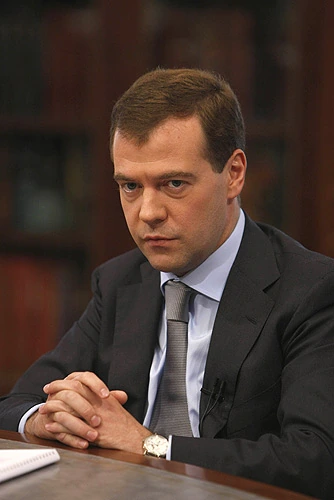
Dmitry Medvedev's net worth is estimated in the range of $500,000 to several million dollars based on official Russian government income declarations, but that figure almost certainly understates his real financial position. Investigative researchers and anti-corruption activists have argued, using property registry records, that assets worth considerably more are controlled indirectly through trusted associates, making a precise single figure essentially impossible to confirm from public sources alone. What we can say with confidence is that his declared income across his years as Prime Minister sat in the low single-digit millions of rubles annually (roughly $100,000–$200,000 USD at contemporary exchange rates), and his officially listed assets were modest by any standard for someone who held Russia's two highest offices.
Dmitry Medvedev Net Worth: Sources, Methodology, Range

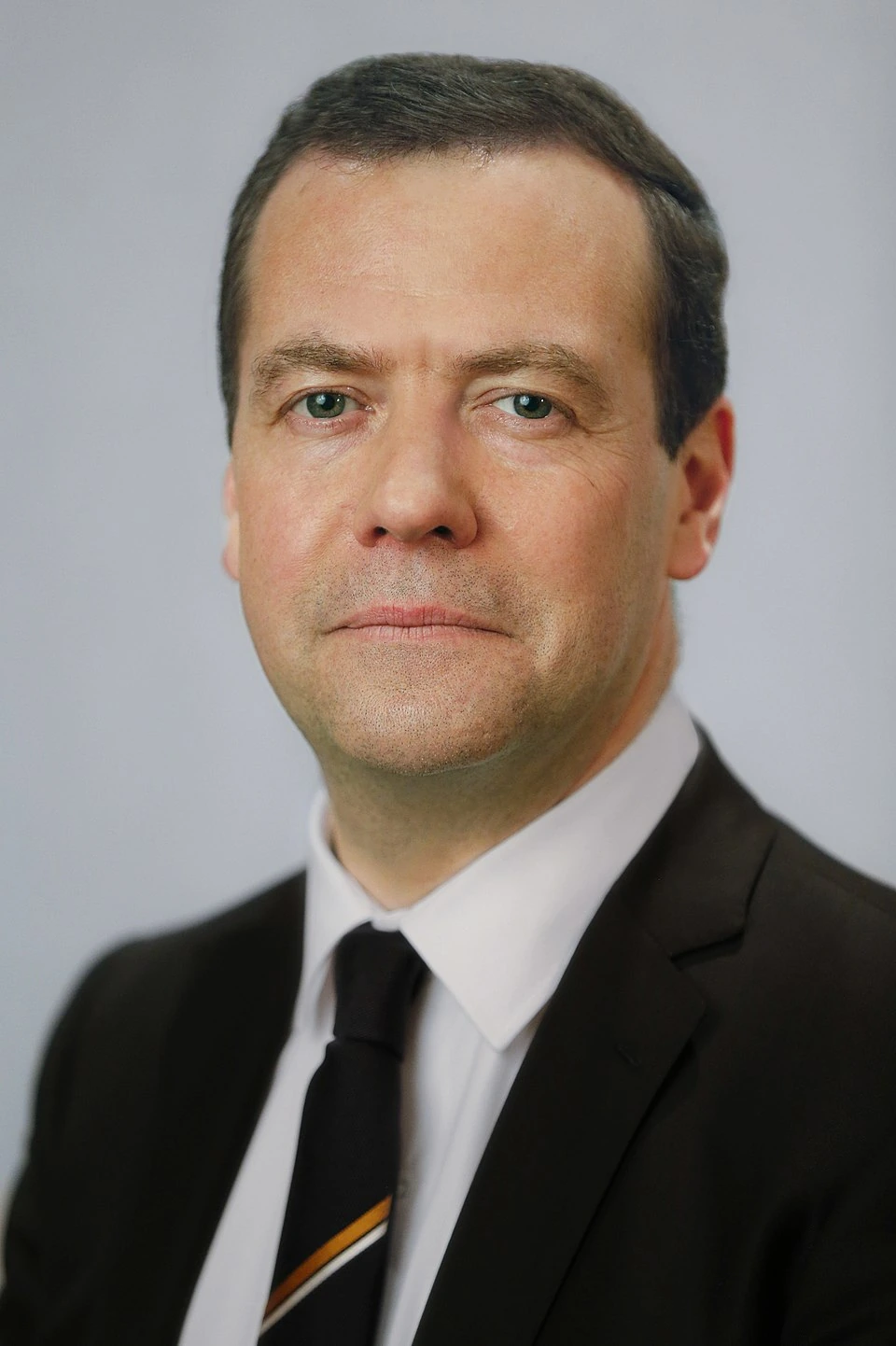
Who exactly we're talking about

The name "Dmitry Medvedev" appears in several public contexts, so it's worth being precise. This article covers Dmitry Anatolyevich Medvedev, born September 14, 1965, the Russian politician and lawyer who served as President of Russia from 2008 to 2012 and as Prime Minister from 2012 to 2020. He is currently Deputy Chairman of the Security Council of Russia.
This is a different person from any military or business figures who share the name, and is also distinct from Daniil Medvedev, the professional tennis player whose net worth profile belongs to a completely separate topic. If you landed here looking for the tennis player, that's covered elsewhere on this site. Alexander Medvedev, the Gazprom executive, is another distinct figure with his own financial profile.
If you are comparing sources, you should also look at how estimates of Alexander Medvedev net worth are compiled and what assumptions different lists rely on.
For net-worth research purposes, Dmitry Medvedev (the politician) is relevant because he occupied the apex of Russian state power for over a decade, during an era when proximity to the Kremlin correlated strongly with accumulated wealth. That context shapes how researchers interpret every number in his declarations.
How databases arrive at a number
It helps to understand that no single authoritative database produces a verified, asset-by-asset net-worth figure for Medvedev. Aggregators like the World Elite Database (WED) define their wealth variable as wealth "as communicated in the media", meaning the number they record is drawn from external rich lists (Forbes, Bloomberg, and similar publications) rather than from an independent audit of his holdings. WED's codebook explicitly notes that its wealth field is a numeric value in billions of USD sourced from these lists, and where multiple family members are included in a study population, family wealth is divided across individuals. That methodology is transparent, but it also means WED inherits whatever assumptions the original list used.
Forbes and Bloomberg, for their part, treat net-worth figures as point-in-time snapshots tied to a specific reference date. Forbes uses that date to value liquid and illiquid assets, while Bloomberg's index applies bull/bear valuation ranges to closely held stakes. Neither list has published a figure for Medvedev comparable to what they maintain for Russian oligarchs and business billionaires, which itself tells you something: Medvedev is not classified as a wealth figure in the same category as Abramovich or Usmanov. His financial profile sits closer to the senior public official tier, where wealth is inferred from declarations and investigative reporting rather than market valuations of company stakes.
Where his money actually comes from
Medvedev's disclosed income sources are straightforward: his state salary as Prime Minister. TASS reported that his 2016 earnings totaled 8.6 million rubles, equivalent to roughly $153,000 USD at the time, a figure entirely consistent with senior Russian government compensation scales. His 2013 declarations showed income that ran about 1.6 million rubles below his 2012 earnings, suggesting annual compensation in the 3–5 million ruble range during that period. Before reaching the top of government, Medvedev had an academic and legal career: he lectured at St. Petersburg State University's law faculty through the 1990s and worked at the city administration under Anatoly Sobchak alongside Vladimir Putin. Those early roles would have generated modest income by any measure.
What makes the wealth question genuinely complicated is the period from 2008 onward. As President and then Prime Minister, Medvedev signed executive orders governing the very declaration regime that applied to him, including a 2009 decree defining how income, property, and liability information for officials and their families would be disclosed publicly. Critics have long pointed out that these disclosure rules covered only spouses and minor children, leaving broader family networks and trusted associates outside mandatory reporting. That structural gap is where the real uncertainty lives.
What his official declarations actually show

Russian officials' declarations follow a standard format: income totals, real estate holdings (listed by type, area, and ownership share), vehicles, and bank account balances. Medvedev's filed declarations over the years produced a surprisingly sparse picture. His 2011 property declaration listed a co-owned apartment of approximately 367. TASS reported that Medvedev’s 2011 income declaration showed he owned a flat of 367.
8 square meters and two garages, as published via the Central Election Commission disclosures 2011 property declaration listed a co-owned apartment of approximately 367. 8 square meters. 8 square meters, a leased land plot of roughly 4,700 square meters, and a collection of vintage Soviet-era cars including a GAZ-20 Pobeda and a GAZ-21.
TASS reported (in an archive report) that Medvedev's 2011 declaration included a leased land plot of about 4,700 square meters under a rent contract and a co-owned apartment of about 367. 8 square meters. One declaration cycle famously noted that he owned no personal car at all, with the family's transport recorded as his wife's Volkswagen Golf.
Bank account disclosures in the same declarations showed relatively modest cash holdings. Taken together, the official declarations would imply a personal net worth well under $1 million USD in declared assets, a figure that has struck many observers as implausible for someone holding the Russian presidency.
| Declaration Period | Key Reported Asset | Approximate Detail |
|---|---|---|
| 2011 (as President) | Co-owned apartment | ~367.8 sq m |
| 2011 (as President) | Leased land plot | ~4,700 sq m |
| 2011 (as President) | Vintage vehicles | GAZ-20 Pobeda, GAZ-21 |
| Early PM years | Personal vehicle | None listed (spouse's VW Golf) |
| 2016 (as PM) | Annual income | 8.6 million rubles (~$153,000 USD) |
| 2013 (as PM) | Annual income | ~1.6 million rubles less than 2012 |
How his financial profile has shifted over time
Medvedev's wealth timeline tracks closely to his political ascent. Through the 1990s and early 2000s, he was a St. Petersburg academic and city official, no meaningful wealth accumulation documented from that period. His appointment to the Kremlin under Putin in 1999, and then as First Deputy Prime Minister in 2005, placed him inside the network where access and influence routinely translate into financial opportunity in Russia. His presidential term from 2008 to 2012 is the period most scrutinized by researchers, partly because it coincided with the global financial crisis and the subsequent commodity price cycle that shaped oligarch fortunes across Russia.
The most significant event affecting perceptions of his wealth came in 2017, when Alexei Navalny's Anti-Corruption Foundation published an investigative report alleging that Medvedev controlled a substantial property and business empire through a network of friends and schoolmates. RFE/RL covered the claims at the time, noting that the investigators used public property registry records to draw connections between Medvedev and assets including country estates, a yacht, and vineyard holdings. Medvedev denied the allegations. The investigation prompted nationwide protests in Russia. For net-worth estimation purposes, the Navalny report introduced a plausible upper-bound argument, but because the alleged holdings are indirect and contested, they cannot be incorporated into a verified estimate with confidence.
After his removal as Prime Minister in January 2020 and his move to the Security Council role, Medvedev's public profile shifted considerably. His current role carries influence but a lower salary tier than the Prime Ministership, and post-2022 international sanctions on Russian officials add another layer of opacity to any financial activity he may have abroad.
The gap between declared assets and probable reality
Russian official asset declarations have well-documented limitations as a wealth-estimation tool. Academic and policy analysis has consistently flagged that the mandatory disclosure regime covers a narrow definition of "family member," that verification mechanisms are weak, and that the penalties for false disclosure were historically toothless. An Institute of Modern Russia analysis described Russia's declarations as effectively "pro forma", documents that satisfy legal requirements without revealing beneficial ownership of assets held through friends, foundations, or corporate structures. Medvedev's own declarations, signed under rules his administration helped craft, illustrate the pattern perfectly: the numbers are internally consistent but almost certainly incomplete.
Property registries represent the strongest documentary evidence available to outside researchers, and the Navalny team made extensive use of them. However, tracing beneficial ownership through Russian corporate structures and nominee arrangements is methodologically difficult, and researchers working from outside Russia face additional access barriers. Sanctions imposed by the EU, UK, and US on Russian officials post-2022 have added compliance-driven incentives to move or obscure assets, further complicating any current-year estimate.
How to read any Medvedev net-worth figure sensibly
The core interpretive challenge with senior Russian political figures is that declared wealth and probable wealth occupy entirely different scales. For oligarchs and business billionaires, figures like those tracked on Forbes Russia lists, market valuations of company stakes provide a concrete anchor even if the precise number shifts daily. For political officials like Medvedev, no such anchor exists in public data. His salary is documented, his declared property is listed, but the plausible indirect holdings are unquantified by design.
A reasonable working interpretation is this: the low end of any credible Medvedev net-worth range reflects declared assets and salary accumulation over his career, call it $500,000 to $2 million USD in verifiable terms. The high end, incorporating the alleged indirect holdings documented by investigative journalists, runs into tens of millions of dollars, possibly more, but remains speculative and contested. The true figure is almost certainly somewhere in between, and it almost certainly cannot be pinned down precisely with currently available public information.
This is not unique to Medvedev. Post-Soviet political figures across Russia, Ukraine, and other former Soviet states routinely present this gap between official declarations and estimated real wealth. Comparing Medvedev's profile with figures like Viktor Medvedchuk, a Ukrainian politician whose financial and political ties have been the subject of asset freezes and sanctions, illustrates how differently political wealth can manifest depending on the country and accountability regime involved.
What to do if you want to dig deeper

If you want to build or verify your own picture of Medvedev's finances, here is where to focus your research efforts:
- Russian government declaration archives: The government's official website (government.ru) has historically published Prime Ministerial income and property declarations. Search for declaration years between 2012 and 2020 and look for the income total, property section, and vehicle/bank-account disclosures. Cross-reference the ruble figures with historical USD exchange rates for each year.
- Russian Federal Property Registry (Rosreestr): Property ownership records are publicly accessible in Russia, at least in principle, though recent regulatory changes have limited some data availability. This is the same registry Navalny's team used to map property connections.
- Investigative journalism archives: The Anti-Corruption Foundation's 2017 report ("He Is Not Dimon to You") is the most detailed primary source on alleged indirect holdings. Read it alongside Medvedev's official denials to understand the evidentiary gap.
- Sanctions lists: Check the EU Consolidated Sanctions List, OFAC's SDN List, and the UK Financial Sanctions Register to understand what official asset-freeze determinations exist and what documentation supported them.
- Media wealth databases: Cross-reference any estimate you find against the originating source. If a site cites "Forbes" as the data origin, find the actual Forbes entry and check its methodology and reference date. If no primary source is cited, treat the figure with skepticism.
- WED and academic databases: For a comparative baseline, the World Elite Database provides wealth figures for Russian elite figures as of its 2020 reference date, which is useful for contextualizing Medvedev within the broader Russian political-economic elite even if the figures themselves are media-derived estimates.
The honest bottom line is that anyone who gives you a single, confident Medvedev net-worth figure without caveats is almost certainly oversimplifying. The documented evidence supports a range, the investigative allegations push that range upward, and the structural opacity of Russian elite wealth means genuine uncertainty is the most accurate position to hold. Treating the estimate as a window into how political power and wealth intersect in Russia, rather than as a precise dollar number, is the most useful frame for understanding what the research actually shows.
FAQ
How can I tell if a website is mixing up Dmitry Medvedev with someone else (name confusion)?
Start by confirming you are tracking Dmitry Anatolyevich Medvedev (born 1965), the Russian statesman. Then check the declaration year range and whether the estimate is based on official assets only, or on media rich lists and property-tracing. Many “net worth” pages mix people with the same name or merge different methodologies, which can swing the figure by orders of magnitude.
Why do “precise” net worth numbers for Medvedev usually look unreliable?
Treat any single dollar figure you see as a derived estimate, not a verified balance sheet. If the source does not describe whether it uses declarations, property registries, media rich lists, or corporate beneficial ownership tracing, you cannot assess how much of the wealth is measured versus assumed.
Can the Navalny-linked allegations be incorporated into an evidence-based net-worth number?
Yes, especially after 2017. Indirect claims from investigative reporting can be used to set an upper bound, but they often cannot be mapped cleanly to legally identifiable ownership shares, so they are usually excluded from “verified” net-worth models or only reflected qualitatively.
How do exchange rate and valuation-date choices affect the USD net worth I see online?
Watch for currency and valuation-date errors. The article notes declared income in rubles, but many aggregators convert to USD using a single exchange rate or an arbitrary reference date. Recomputing with the same date assumptions used by the estimator can materially change USD equivalents.
What kinds of declared assets are most likely to be undervalued in net-worth estimates?
Look for whether the method includes both real estate and vehicles at disclosed values. In Russian declarations, asset listings can omit liquidation value, and some vehicles may be leased or recorded differently across years, so declared “asset totals” can understate economic value if you assume market pricing.
How do post-2022 sanctions change the way I should interpret Medvedev’s financial data?
Sanctions increase opacity, but they do not automatically mean assets are gone. For research, focus on whether post-2022 declarations show changed account balances, new ownership structures, or reduced banking transparency, and compare that trend against earlier years rather than trying to infer current value from older snapshots.
What checks can I do on declarations to see whether an estimate is using the correct years?
Compare declarations year-by-year for consistency checks: property changes, vehicle ownership shifts, and bank balance trends. If an estimate cites a declaration but ignores the timing (for example using 2011 assets to claim current net worth), it is likely mixing snapshots and inflating uncertainty into a fake precision.
What’s the practical difference between “property registry linked” claims and truly beneficial ownership-linked estimates?
Beneficial-ownership tracing depends on corporate structures, nominee arrangements, and whether registries reveal controlling persons. If a site only lists property names and lacks a stated path to beneficial ownership, its “connected wealth” claim is closer to a hypothesis than a computable net worth.
What’s a good method to build a transparent low-end-to-high-end net-worth range?
If you want a cautious range, base the low end on declared salary and explicitly listed assets, then widen the band for potential indirect holdings only where investigators provide a reasonably detailed ownership chain. Avoid ranges that are purely rhetorical, with no link to which evidence is included or excluded.
How should I rate confidence in different types of Medvedev wealth estimates?
Use a confidence label. For example: “declared-only” (higher confidence), “declaration plus market-priced valuations” (medium, if valuation assumptions are explicit), and “investigative indirect holdings” (lower confidence due to contested access and ownership uncertainty). This prevents one number from being treated as equally reliable.