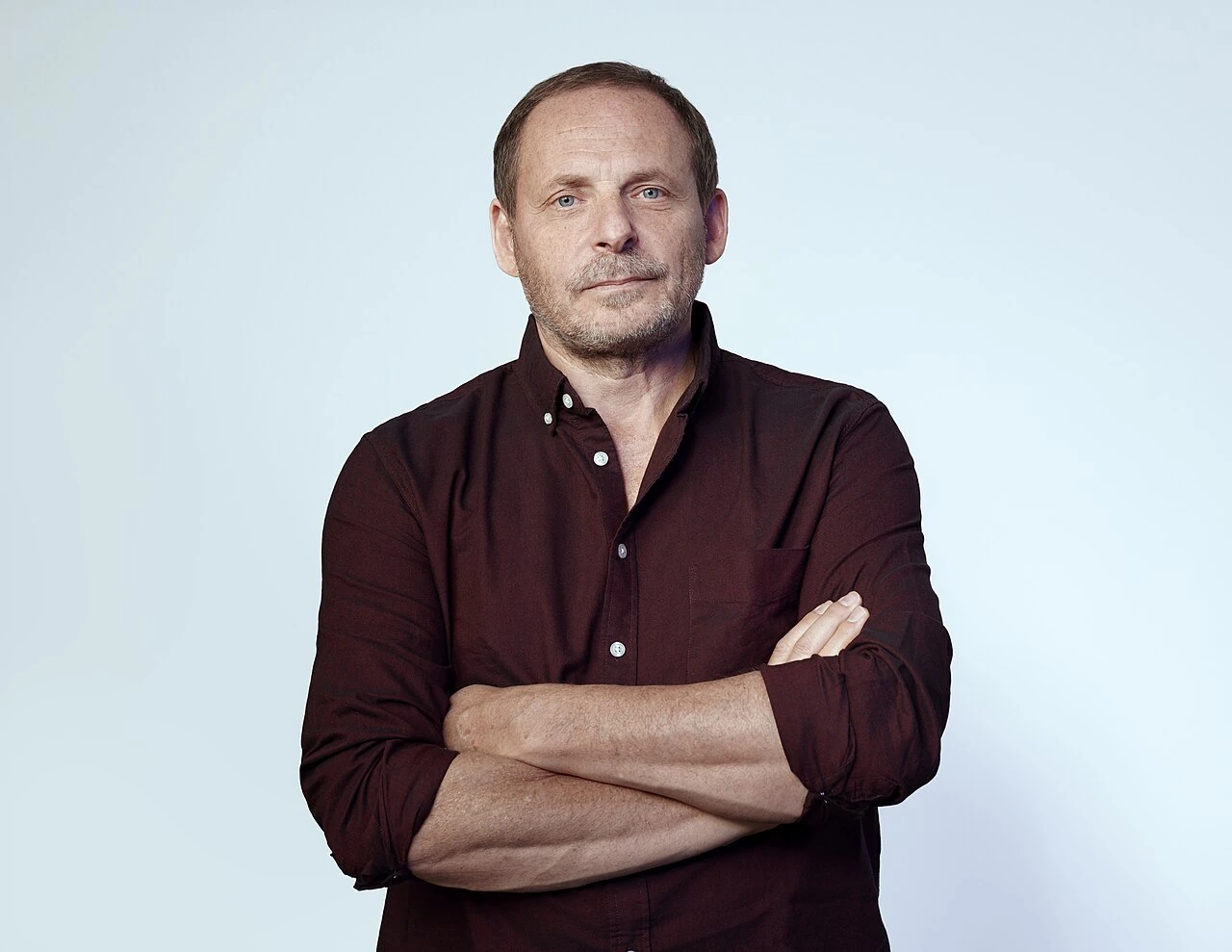
If you're searching for Artem Sokolov's net worth, the most likely person you mean is Artem Sokolov, the founder-succession CEO and former co-owner of SOKOLOV, Russia's largest jewelry brand. Based on the August 2025 sale of the company to private investor Anton Pak, our best defensible estimate for Artem Sokolov's net worth at the time of the transaction is in the range of $150 million to $400 million USD, though the actual figure depends heavily on deal terms that have not been made fully public. That's a wide range, and the rest of this article explains exactly why.
Artem Sokolov Net Worth: Estimate, Sources, and Methodology

Dmitri Volkov
11 Jun 2026

There are many Artem Sokolovs, here's which one matters
The name Artem Sokolov is genuinely common. LinkedIn returns over 100 distinct profiles for it. ArXiv lists an academic author by the same name publishing in 2025. There's even an Artem Sokolov in Putnam, Connecticut with a tech and QA background. None of those are relevant here. There are also two distinct prominent Russian public figures who share this name and who both appear regularly in Russian business media in 2025 and 2026.
The first is Artem Sokolov (Артём Соколов), the eldest son of the founders of the Russian jewelry company SOKOLOV. He was appointed CEO when the company was renamed and repositioned in 2014, and Interfax explicitly described him as the "beneficiary of Sokolov Group" in coverage of the August 2025 sale. This is the wealth-relevant figure. The second is a separate Artem Sokolov who has served as President of AKIT (the Association of Internet Trade Companies) since June 2018, was re-elected to that role multiple times, and was quoted by RBC as recently as June 3, 2026 on e-commerce regulation. The SPIEF 2026 Business Programme PDF lists “Artem Sokolov, President, Association of Internet Trade Companies (AKIT)” blank" rel="noopener noreferrer">President of AKIT (the Association of Internet Trade Companies) since June 2018. The AKIT president is an influential industry lobbyist, but that role is not associated with the kind of company ownership stake that drives large net worth estimates. Unless you have specific reason to believe otherwise, the jewelry company owner is almost certainly the person you're looking for.
The net worth estimate and what's behind it
Putting a single number on Artem Sokolov's net worth isn't realistic given the available information, so a range is more honest. Our estimate for the jewelry company owner is $150 million to $400 million USD as of mid-2026, reflecting his post-sale position following the August 2025 transaction with Anton Pak. For more on that jewelry heir’s financial standing, see Arkady Novikov net worth.
| Scenario | Estimated Net Worth (USD) | Key Assumption |
|---|---|---|
| Conservative | $150 million | Sale price at low revenue multiple; significant debt in the holding structure; partial stake only |
| Base case | $250 million | Mid-range revenue multiple on ~$500M+ annual revenues; full beneficiary stake realized |
| Optimistic | $400 million | High multiple reflecting brand premium; clean balance sheet; additional retained assets |
These are model-driven estimates, not confirmed figures. No public filing or official disclosure has confirmed the transaction price. The range should be treated as directional rather than definitive.
Career, income sources, and what he owned
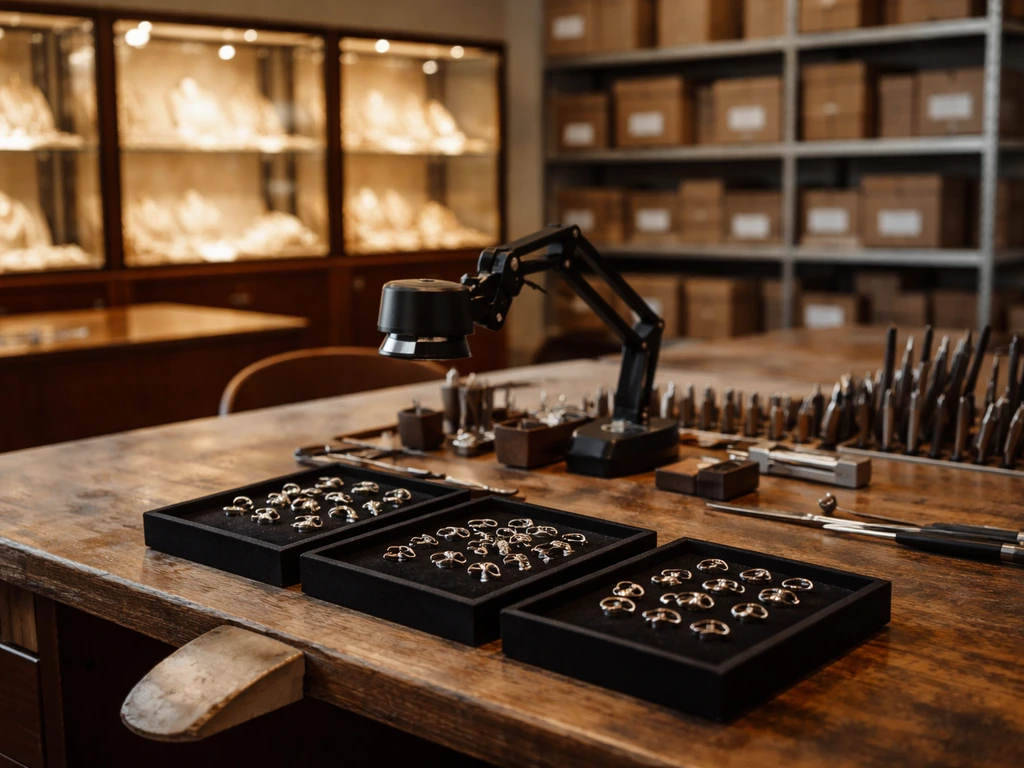
SOKOLOV was founded in 1993 in the Kostroma region of Russia, which has historically been the country's jewelry manufacturing heartland. Artem Sokolov entered the business through family succession: Wikipedia's company history records that he, as the founders' eldest son, was appointed CEO around the time the company adopted the SOKOLOV brand name in 2014. By 2022 the company had grown to more than 400 mono-brand stores and was publicly discussing plans for a dual-listed IPO, including a potential U.S. listing. Reuters quoted Artem Sokolov describing himself as "managing partner and co-owner" during that IPO discussion period, putting his ownership claim on the record in an international wire.
The IPO never happened, likely derailed by geopolitical events in 2022. Instead, the company continued to operate as a private holding until August 14, 2025, when the sale to Anton Pak was announced. Aspring Capital served as the exclusive financial advisor to the seller, which is relevant because it confirms the transaction was structured with professional M&A advisory involvement, not a distressed or informal transfer. Interfax, RBC, and Kommersant all covered the sale in their business sections, which is the tier of Russian financial journalism that typically handles credible corporate transactions.
- Primary income source: ownership stake in SOKOLOV jewelry holding (beneficiary designation confirmed by Interfax)
- Secondary income: CEO/executive compensation during tenure as managing partner (2014 through at least 2025)
- Potential retained assets: real estate, investment holdings, or minority stakes not captured in the sale
- Pre-sale income: dividends from a fast-growing private company that reportedly saw revenues double in the early 2020s
How the estimate is calculated
Without a confirmed sale price, the estimate has to be built from the outside in. The standard approach for private company valuation, as described in Forbes' own methodology for the Forbes 400, is to apply revenue or earnings multiples from comparable public companies and then adjust for private company discounts, debt levels, and available financial indicators. For a Russian jewelry retailer with national brand recognition, 400-plus stores, and growing revenues, the relevant comparables sit somewhere between pure retail multiples (low) and branded consumer goods multiples (higher). Russian jewelry market multiples are also compressed by geopolitical risk and ruble-denominated revenue exposure.
Applying a conservative 0.3x to 0.8x revenue multiple against estimated annual revenues in the $400 million to $600 million range (implied by the Reuters report of revenues doubling in the early 2020s and general market scale) produces a company valuation of roughly $120 million to $480 million. Assuming Artem Sokolov was the sole or near-sole beneficiary (as the Interfax framing suggests), his realized proceeds from the sale would be in that range before taxes and any deal structure adjustments. Adding likely retained personal assets (real estate, prior-year dividends invested elsewhere) brings the total net worth figure to the $150 million to $400 million range stated above.
Why post-Soviet wealth estimates are always uncertain
Russia doesn't have a public beneficial ownership register that works the way Western equivalents do. Private company financials are rarely disclosed in detail. Tax records aren't public. And corporate structures in Russian business often involve multiple layers of holding companies, sometimes registered in jurisdictions outside Russia, that make it genuinely difficult to determine who owns what and for how much. This isn't speculation: it's the structural reality of how private wealth in Russia is held and transferred. Even Artem Sokolov's ownership percentage in the SOKOLOV group was never publicly disclosed in precise terms, despite him being identified as the company's managing partner, co-owner, and ultimately beneficiary.
The August 2025 sale changes the picture somewhat, because a completed M&A transaction typically means a definite sum of money changed hands. But the deal terms, including the price, the structure (cash vs. deferred consideration, earn-outs, retained equity), and any associated debt assumptions, have not been published. Aspring Capital's advisory announcement and Interfax's coverage confirm the transaction happened but provide no pricing detail. That gap is not unusual for Russian M&A. Comparable figures in this space, like other post-Soviet business owners who have monetized company stakes, often remain in net worth ranges rather than precise figures for exactly this reason. For context, this kind of uncertainty is also present in profiles of figures like Arkady Volozh (Yandex) and Arkady Novikov (restaurant hospitality), where wealth estimates span hundreds of millions but depend heavily on company valuations that are not directly observable.
How to verify this yourself and what to watch for
If you want to validate or update this estimate, here's where to look and what to look for:
- Interfax and RBC (Russian editions): These are the two most reliable Russian-language sources for corporate transaction coverage. Search for 'Артём Соколов SOKOLOV' or 'Соколов ювелирный Антон Пак' to find the original transaction reporting from August 2025.
- Aspring Capital's website: Their advisory announcement on the SOKOLOV sale is publicly listed. Any updates to deal terms or follow-on transactions may appear here first.
- Kommersant business section: Kommersant is the closest Russian equivalent to a financial daily and often publishes deal valuations or sources close to the transaction.
- Russian Federal Tax Service (FNS) and SPARK-Interfax: SPARK is a paid Russian corporate database that shows registered legal entities, directors, and sometimes financial filings. If Sokolov Group's subsidiaries filed accounts, they may be visible here.
- Forbes Russia: Forbes Russia publishes its own rich list annually. If Artem Sokolov appears on a future list, it would represent an independent estimate with their own methodology applied.
- Anton Pak's subsequent statements: The new owner, Anton Pak, may make statements about the company's valuation or strategic direction that imply a purchase price range.
When evaluating any source, watch for a few red flags. Sites that give a single precise number (say, '$280 million exactly') without citing a source or explaining methodology are almost certainly fabricating. Net worth aggregator sites that list figures for Russian private figures without a transaction basis or financial filing are not reliable. The name collision problem is also real: confirm that any source you find is referring to the jewelry company owner specifically, not the AKIT president or an unrelated person entirely. Even when you see an article about net worth, double-check that it is not mixing up different people with similar names, since this name collision problem also shows up with searches like artem petakov net worth. If you're specifically looking for Artem Chigvintsev net worth, you’ll want to verify which public profile or sources the number is actually based on.
The information most likely to sharpen this estimate is any public disclosure of the SOKOLOV sale price. If Anton Pak refinances the company, lists it, or mentions a purchase price in an interview, that single data point would anchor the estimate significantly. Similarly, if Artem Sokolov appears on Forbes Russia's list in 2026 or 2027, that would be the most widely cited independent figure to work from. Until then, $150 million to $400 million is the most defensible range available from the current evidence base.
FAQ
How do I confirm I am looking at the right Artem Sokolov when there are multiple people with the same name?
Check that the coverage specifically connects Artem Sokolov to SOKOLOV, including phrases like “managing partner,” “co-owner,” “beneficiary of Sokolov Group,” or any reference to the August 2025 sale. If the article instead focuses on AKIT, e-commerce regulation, or industry lobbying without tying to SOKOLOV ownership, it is likely a different Artem Sokolov and should be excluded.
If the sale price becomes known, what factors would most change the net worth estimate?
The range would shift more if the buyer financed the purchase through debt that was assumed by the sellers, or if there was deferred payment or earn-outs. If a confirmed price later appears, you would also adjust for any stated debt at closing (net of cash), because net worth from a sale is more directly linked to realized proceeds than to headline enterprise value.
What are the biggest red flags that a net worth number is fabricated or misleading?
Beware of “exact number” claims that are not tied to a transaction anchor or a stated valuation method. A credible estimate usually explains whether it is using enterprise value versus equity value, how it treats debt and cash, and how it handles the private discount. If a source provides only one precise dollar figure with no methodology, treat it as unreliable.
Can Artem Sokolov’s net worth differ from the sale valuation because of corporate structure or retained assets?
Yes. Even with a known company valuation, personal net worth can differ depending on whether Artem Sokolov personally owned the operating entity versus holding it through layered structures, and whether some value was retained in the group via dividends, reinvestment, or equity stakes that were not part of the sale.
What is the best way to update the estimate after the August 2025 transaction?
Use a two-step reality check: (1) look for confirmation of the transaction (deal completion, not just reports of talks), then (2) look for at least one pricing anchor such as an interview quote, a disclosed purchase price, or a credible business wire detail. Without a pricing anchor, any narrower number than the stated range is usually guesswork.
If Artem Sokolov appears on Forbes Russia, how should I interpret it for net worth accuracy?
If you find a Forbes Russia mention, focus on the year and the reported valuation basis (whether it references a disclosed stake value or a model). Also confirm the listing name matches the jewelry owner, not AKIT leadership or another individual, since name collisions can distort aggregations.
Why can it be wrong to value SOKOLOV using generic luxury retail multiples?
A common mistake is using global luxury retail multiples directly without adjusting for the specific market context. Russia-specific risk, currency exposure, and private discount can materially compress valuation versus what a U.S. or Western public-company comparable might imply, which is why the article’s multiple range is intentionally conservative.
How would a partial sale of assets or only some equity being sold affect the net worth range?
If a future source reveals that the sale included only part of the business or specific assets (for example, certain brands, stores, or IP), then your valuation should be scaled down. Similarly, if the deal involved transferring equity in subsidiaries rather than the parent, the beneficiary’s realized proceeds might be lower than the headline group value.
How can I tell whether a wide net worth range is reasonable uncertainty versus pure speculation?
If you see very wide ranges online, the method should tell you why. A defensible range usually explains uncertainty sources such as undisclosed ownership percentages, private company financial opacity, and unknown deal structure terms, then connects those uncertainties to valuation inputs like multiples and net debt.